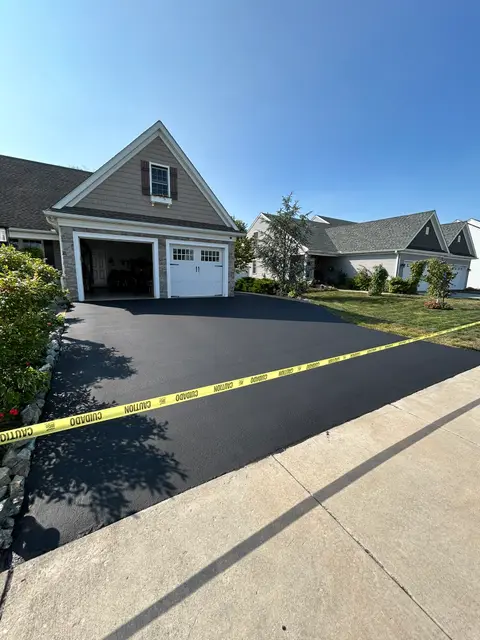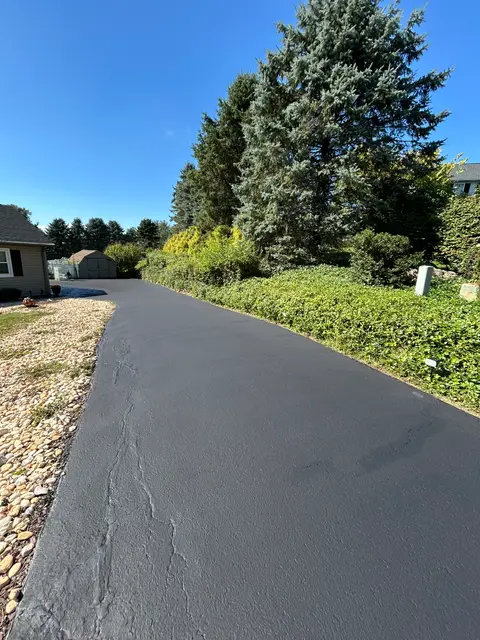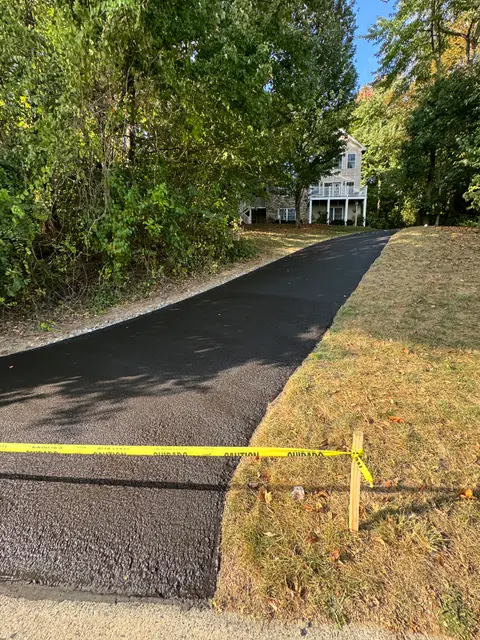
An asphalt driveway does not need much attention, but it does need the right attention at the right time of year. Most of the driveways we see in rough shape are not old. They are neglected. A few hours of work each year, done in the right order, is the difference between a driveway that lasts and one that needs major repair long before its time.
Here is the maintenance schedule we would follow for our own driveways in Lancaster County, season by season, plus a section on the most common question we get from homeowners: how to get oil stains off asphalt.
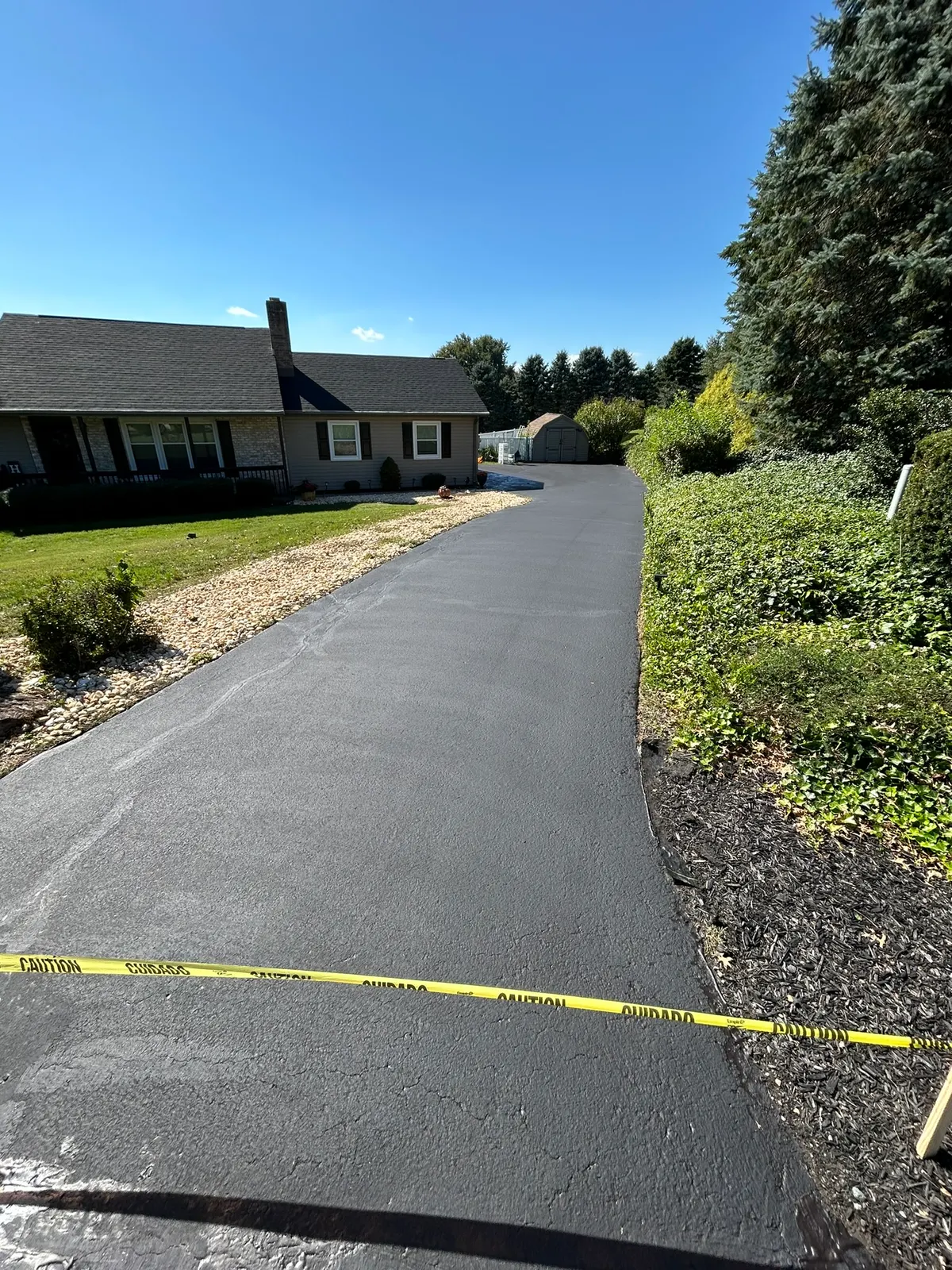
Why a schedule matters here
Pennsylvania is hard on asphalt. Summers are hot and sunny, which dries out the binder that holds asphalt together. Winters bring snow, road salt and dozens of freeze and thaw cycles. Every one of those cycles lets water into small cracks, freezes it, and pushes the pavement apart a little more. Maintenance is mostly about one thing: keeping water out of the pavement and keeping the surface flexible.
Spring (March to May): inspect and repair
Spring is when you find out what winter did.
Walk the whole driveway on a dry day after the last hard freeze. Look for:
- New cracks, and old cracks that got wider.
- Potholes or soft spots, especially near the garage and at the street end.
- Crumbling or broken edges where tires run off the asphalt or plows scraped it.
- Low spots where water stands after rain.
- Damage from snow plows and shovels.
- Oil stains from winter parking.
Clean up winter debris. Sweep away sand, salt residue and the gravel that collects at the street end.
Fix holes first. Potholes and failed spots should be repaired before anything else, once hot mix is available again in spring. A temporary cold patch from the winter should be replaced with a permanent repair. Our guide to cold patch vs. hot mix explains why.
Note drainage problems. If water pools on the driveway or runs along the edge and washes out the soil, that is worth addressing before it undermines the base. Downspouts that dump onto the driveway are a common culprit.
Summer (June to August): seal if it is time
Summer is sealcoating season. Warm, dry weather gives sealer the best chance to cure properly.
Seal every three to four years. If the driveway has turned gray, the stones are starting to show and it has been a few years since the last coat, this is the time. If it was sealed recently and still looks dark, leave it.
Fill cracks before sealing. Sealer does not fill cracks. Any crack wider than a hairline should be filled first with a rubberized material, then sealed over.
Watch the heat. On very hot days, sealer can flash off too fast. Early mornings are better for the work.
Keep the edges clear. Trim grass back from the driveway edge so it does not grow over the asphalt and trap moisture.
If you are not sure what driveway sealing involves, or what the different names for it mean, see driveway sealing vs. sealcoating. If you want to do it yourself, read how to seal coat a driveway.
Fall (September to November): fill the cracks
If you only do one thing a year, do this.
Fill every open crack before winter. Cracks are at their widest in cool weather, so filler goes in deep. Sealing them before the first freeze keeps water out during the months when it does the most damage. Hot pour rubberized filler lasts much longer than the cold pour products in hardware stores. Our driveway crack repair guide covers the options.
Clear leaves. Wet leaves sitting on asphalt hold moisture against the surface and stain it. Blow them off regularly.
Prepare for snow. Mark the edges of the driveway with stakes so the plow driver can see them. A lot of edge damage comes from plows that cannot tell where the asphalt ends.
Check the edges. Fill in soil along any edge that has washed out, so the asphalt has support through the winter.
Winter (December to February): protect and do no harm
Winter is about avoiding damage.
Shovel and plow carefully. Use plastic shovel blades or a shovel with a rubber edge, and set plow blades slightly above the surface. Metal edges dragged across asphalt gouge it.
Go easy on the salt. Rock salt does not dissolve asphalt, but it speeds up freeze and thaw damage and leaves residue. Use only what you need for safety, and sweep up excess when the weather breaks.
Do not chip ice off the surface. Let it melt or use a de-icer. Chipping damages the asphalt.
Make temporary repairs when needed. If a dangerous hole opens up, a cold patch keeps it safe until spring. Make a note to repair it properly later.
How to remove oil stains from asphalt
Oil, transmission fluid and gasoline are petroleum products, and so is the binder in asphalt. That is why oil stains do more than look bad: they soften the surface and, left alone, can turn into a soft spot or a hole.
For fresh spills:
- Soak up as much as possible right away with an absorbent such as cat litter, sawdust or a commercial absorbent. Spread it on, grind it in with your shoe, leave it for several hours or overnight, then sweep it up.
- Repeat if the spot is still wet.
For older stains:
- Scrub with a stiff brush and a degreaser or dish detergent mixed with warm water. Work it in, let it sit a few minutes, then rinse thoroughly.
- Repeat as needed. Older stains may lighten rather than disappear completely.
- Avoid harsh solvents and avoid scrubbing so hard that you loosen the surface stones.
Before sealing: stained areas need to be cleaned and treated with oil spot primer, or the sealer will peel off them. This is part of a proper sealcoating job.
Prevent it: put a drip pan or a mat under a car that leaks, and get the leak fixed. A sealed driveway resists oil much better than a bare one, because spills sit on top of the sealer instead of soaking in.
Everyday habits that help
- Avoid turning the wheel while the car is standing still, especially on hot days and on fresh sealer.
- Keep heavy vehicles off the edges. Asphalt edges without a curb break under weight.
- Do not park heavy equipment or dumpsters on the driveway for long periods without boards under the wheels or feet.
- Keep drains and gutters clear so water goes away from the driveway, not onto it.
- Address small problems small. A crack today is a pothole next spring.
A simple calendar
| When | What |
|---|---|
| March to April | Walk the driveway, sweep, note damage |
| April to May | Repair potholes and failed spots |
| June to August | Sealcoat every three to four years, after filling cracks |
| September to November | Fill cracks, clear leaves, mark edges for plows |
| December to February | Careful shoveling and plowing, minimal salt, temporary patches only |
| Year round | Clean oil spills right away |
How long an asphalt driveway can last
How long a driveway lasts depends on how it was built, the base under it, drainage, traffic and maintenance. A well built driveway that gets its cracks filled and its surface sealed on schedule lasts far longer than one that is left alone. Maintenance does not stop aging, but it slows it down a lot, and it costs a small fraction of what repaving does.
Signs a driveway needs more than maintenance
Maintenance slows aging, but it cannot reverse structural failure. Call for an assessment rather than just sealing or filling if you see:
- Alligator cracking across large areas, a web of connected cracks that means the base underneath has failed.
- Potholes that keep coming back in the same spots after repairs, which usually points to drainage or base problems.
- Sunken or heaved sections where the surface is no longer flat.
- Edges crumbling along most of the length of the driveway.
- Water that stands for hours after rain in the same places.
None of these automatically mean the driveway has to be replaced. Some can be repaired in sections. But they do mean that sealer and crack filler alone are no longer the answer, and an honest look at the base and drainage should come first.
Frequently asked questions
How often should I seal my asphalt driveway?
Every three to four years for most driveways. Not every year.
When is the best time to fill cracks?
Fall, before winter. Spring is the second best time.
Does salt damage asphalt?
Salt does not dissolve asphalt, but it adds to freeze and thaw damage. Use it sparingly.
Should I pressure wash my asphalt driveway?
A gentle rinse is fine. Very high pressure aimed close to the surface can loosen stones on older asphalt. A good sweep and a blower do most of the work.
What is the most important maintenance step?
Filling cracks before winter. It keeps water out of the pavement, and water is what destroys asphalt in Pennsylvania.
Want help keeping your driveway in shape?
Lancaster Lines & Asphalt handles every step on this calendar: asphalt repair in spring, driveway sealing in summer, crack filling in fall. See our driveway sealing, crack filling and asphalt repair pages, or request a free quote.