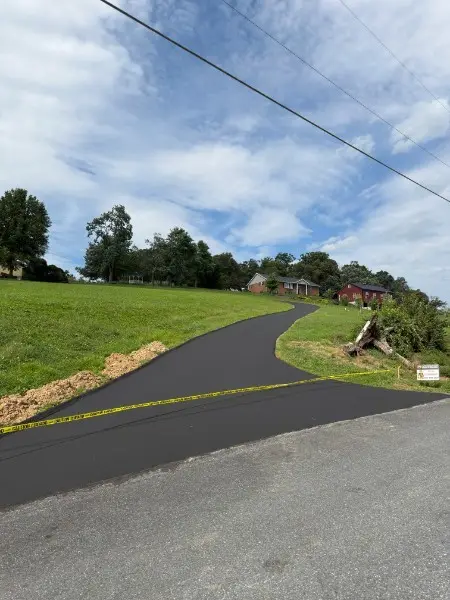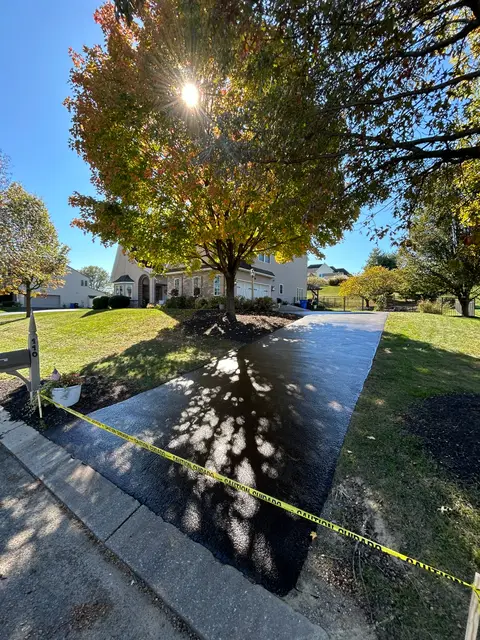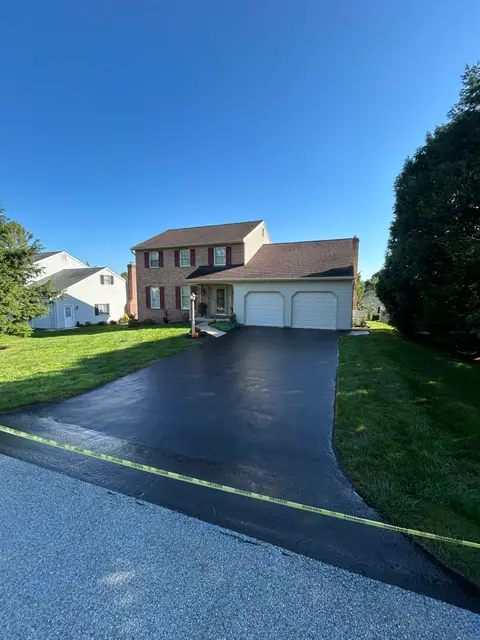
Call five asphalt contractors in Lancaster County and you will hear five different names for the same job. One says driveway sealing. One says sealcoating. One writes seal coating as two words. One calls it blacktop sealing, and somebody's grandfather still calls it tarring the driveway. Homeowners reasonably wonder whether these are different services with different prices and different results.
They are not. With one or two exceptions that matter, every one of these names describes the same work. This guide sorts out the vocabulary, explains what actually goes onto your driveway, and shows you which questions tell you more about a contractor than the name they use.
The short answer
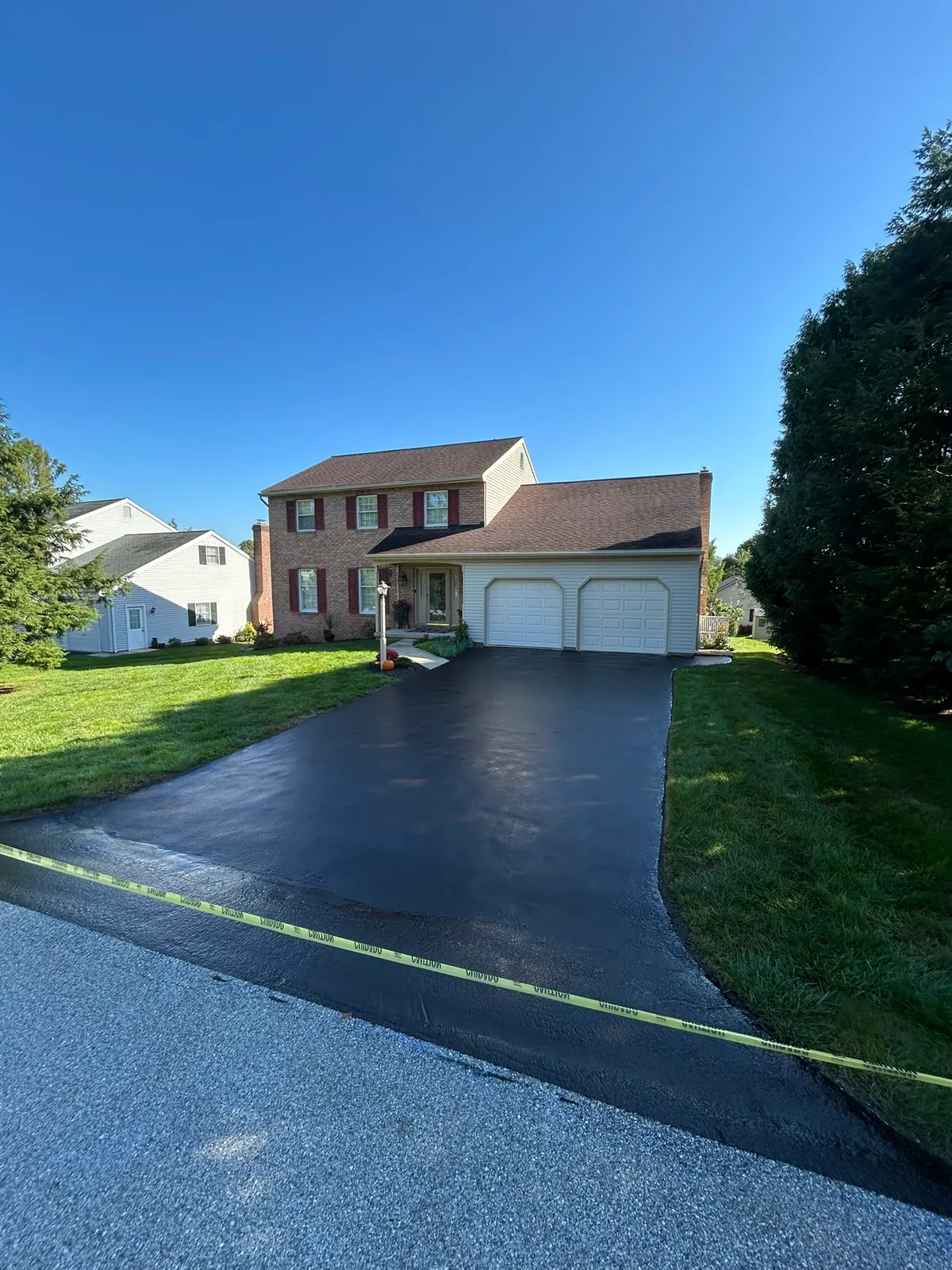
Driveway sealing, sealcoating, seal coating, asphalt sealing, blacktop sealing and driveway sealcoating all mean the same thing: cleaning an asphalt surface and applying a thin protective coat of liquid sealer that dries into a black, water resistant film. The words differ because people learned the trade in different places, not because the job is different.
The two places where the words really do point to different things are covered further down: tar and chip, and concrete sealing. Neither one is what most people mean when they ask about sealing their driveway.
Why there are so many names
Sealcoating is the trade name. It is what manufacturers, industry groups and most contractors put on their trucks. It describes exactly what happens: a coat of sealer.
Seal coating is the same word written as two words. Search engines and people treat them as interchangeable. You will see both on invoices from the same company.
Driveway sealing is how most homeowners describe it. Nobody thinks of their driveway as a pavement surface that needs a coating system. They think the driveway needs sealing, and they are right.
Blacktop sealing comes from the word blacktop, which is just another name for asphalt. It is common in Pennsylvania, Ohio and across the Midwest. If your neighbor says the blacktop needs sealing, they mean the same coat of sealer.
Asphalt sealing is the most literal name. It tends to be used for parking lots and commercial work, but it is the same process at a larger scale. Parking lot sealing is the same thing again, applied to a lot.
Tarring the driveway is the old way of saying it, from the days when many sealers were made from coal tar. The phrase stuck around long after most residential sealers moved to asphalt based products.
What actually goes on the driveway
Whatever the name, a professional job applies the same kind of material.
- A binder. Most residential sealer today is an asphalt emulsion, which means asphalt suspended in water. Some products are refined coal tar, and some are acrylic or polymer based. The binder is what makes the film stick and stay flexible.
- Mineral fillers. Fine fillers give the sealer body so it can fill the tiny pores in the surface.
- Sand. Silica sand is added for traction, so the finished driveway is not slick when wet.
- Additives. Small amounts of polymers help the coat cure evenly and resist scuffing.
The type of binder is worth asking about. Coal tar sealers have been restricted in several states and many local governments over environmental concerns, so a lot of contractors have moved away from them. A professional should be able to tell you what product they are using and why, without hesitation.
What the job includes, whatever it is called
The name on the estimate matters much less than the steps listed on it. A driveway sealing job done properly includes:
- Inspection. Is the asphalt old enough to seal (at least six to twelve months after paving), and solid enough that sealing will help?
- Cleaning. Dirt and debris blown off, vegetation scraped out of the edges.
- Oil spot treatment. Oil stains primed so the sealer bonds instead of peeling off them.
- Crack filling. Cracks filled with hot rubberized material before sealing. Sealer alone does not fill a crack.
- Edge work by hand. The perimeter cut in with a brush along garage aprons, walkways and lawns.
- Two coats. Two thin coats rather than one thick one.
- Cure time. Usually 24 to 48 hours off the driveway, with cones or tape in place.
If an estimate says sealcoating but skips half of these steps, it is not a better job because of the name. If it says blacktop sealing and covers every step, it is a proper job. We walk through each step in detail in what actually happens when we sealcoat your driveway.
Where the words really do mean something different
Tar and chip is not sealing
Tar and chip, sometimes called chip seal, is a different surface treatment. Liquid asphalt is sprayed over a base and stone chips are rolled into it, leaving a textured, gravel-like surface. It is used on rural lanes and some long driveways. It is not a coat of sealer over existing blacktop, and it does not look like a sealcoated driveway. If someone offers to tar and chip your driveway, ask them to describe the finished surface so you know what you are buying.
Concrete sealing is a different product
Cement or concrete driveways can be sealed too, but with entirely different products: penetrating silane or siloxane sealers, or acrylic film sealers. Asphalt sealer does not belong on concrete. If you have a concrete apron at the garage and asphalt everywhere else, the sealer stops at the joint. That edge is one of the places careful hand work matters most.
Resurfacing and paving are not sealing
A sealer coat is a few hundredths of an inch thick. It protects pavement that is still sound. Resurfacing (an overlay of new asphalt) or repaving is a structural fix for pavement that has failed. Some contractors use the word resurfacing loosely for a sealcoat because the driveway looks new afterward. Ask which one you are getting. A coat of sealer will not fix sunken areas, a crumbling base or widespread alligator cracking.
Does the name affect the price or the result?
No. What affects the result is the quality of the sealer, the number of coats, the prep work and the weather on the day. What affects the price is the size of the driveway, its condition, how much crack filling and edge work it needs, and access. The word on the estimate does neither.
There is one useful signal in the vocabulary, though. A contractor who is precise about the product and the steps, whatever name they use, usually does careful work. A contractor who is vague about everything except the word sealcoating is worth a second look.
How to tell a good sealing job from a bad one
You do not need to know the trade name to judge the work. Look for these after the job:
- Even color. No streaks, no thin patches where the old gray shows through.
- Clean edges. A straight line along concrete, pavers, grass and the garage door. No sealer on your siding or walkway.
- Filled cracks. Cracks visible as smooth black lines, not open gaps painted over.
- No puddling. Sealer should not pool in low spots, especially on sloped driveways.
- A cure plan. Cones or tape left in place and a clear time for when you can drive on it.
And these, a few weeks later:
- No peeling at oil spots. If it peels there, the spots were not primed.
- No tracking. If tire marks show up after you started driving on it, the coat was too thick or the cure was cut short.
How often to seal, by any name
Most asphalt driveways in Lancaster County do best with a fresh coat every three to four years. Busy commercial lots often need it every two to three. Sealing every year is not better. Coats build up, crack and flake when they are applied too often. Fill cracks every fall, seal on a three to four year rhythm, and walk the driveway each spring to catch anything new.
Questions to ask, whatever the contractor calls it
- What sealer do you use, and is it asphalt emulsion, coal tar or something else?
- How many coats, and how do you apply them?
- Do you fill cracks first, and with what material?
- How do you handle oil spots?
- Do you cut the edges by hand?
- What weather do you need, and what happens if rain is forecast?
- How long until I can walk on it, and drive on it?
- Are you insured?
- Will I get the price in writing before you start?
A straight answer to all nine tells you more than any name on a truck.
Frequently asked questions
Is seal coating the same as sealcoating?
Yes. It is the same word written two ways.
Is blacktop sealing the same as asphalt sealing?
Yes. Blacktop is another name for asphalt, so blacktop sealing, asphalt sealing and driveway sealing all describe the same job.
Is tarring a driveway the same as sealing it?
Usually people mean the same thing, a coat of sealer. Strictly, tar refers to coal tar sealer, which is now restricted in several places. Ask which product will be used.
Is tar and chip the same as sealcoating?
No. Tar and chip is a stone-covered surface treatment, not a coat of sealer over existing asphalt.
Does sealing fix cracks and potholes?
No. Cracks need to be filled first, and potholes need a proper repair. Sealer protects the pavement around those repairs. See our asphalt and pothole repair and crack filling and sealing pages.
Can you seal a brand new driveway?
Not right away. New asphalt needs six to twelve months to cure before the first coat.
Ready to get your driveway sealed?
Call it driveway sealing, sealcoating or blacktop sealing, we are happy to look at it. Lancaster Lines & Asphalt seals driveways and parking lots across Lancaster County with proper prep, crack filling, hand-cut edges and two coats, and you get a free written price before we start. See our driveway sealing page or request a free quote.