Every spring in Lancaster County I get a wave of calls from homeowners and property managers who walk outside after the snow melts and realize their driveway or parking lot looks completely different from how they left it in October. New cracks, bigger cracks, a pothole where there definitely was not one before. It happens every year. Winter here is genuinely rough on asphalt, and spring is the time to deal with it before the problems get worse through the summer heat.
I put together this checklist based on what I actually look at when I do a site visit in the spring. You can use it to walk your own property and get a sense of what you are dealing with before you call anyone. Some of it you can monitor yourself. Some of it needs a professional to assess properly. Either way, knowing what to look for puts you in a better position.
Why Lancaster County winters are so hard on asphalt
Before getting into the checklist, it helps to understand what is happening to your pavement between November and March. The main culprit is the freeze-thaw cycle. Water gets into the small cracks and pores in your asphalt, then temperatures drop below 32 degrees, and that water expands by about 9 percent as it freezes. That expansion pushes the asphalt apart from the inside. When it thaws, the water contracts and leaves a small void. Do that 40 or 50 times over a winter and those small cracks become real problems.
According to NOAA climate data for Lancaster PA, we average around 30 inches of snow per year and temperatures that swing above and below freezing dozens of times between December and March. That is a lot of cycles. Add in road salt tracking onto private lots, vehicle traffic on weakened surfaces, and the occasional ice storm, and you understand why spring reveals so much damage that was not visible in the fall.
The good news is that most of it is fixable, and fixing it in the spring before summer traffic and heat set in gives repairs the best chance to hold long term. The National Asphalt Pavement Association recommends spring as the primary season for pavement inspection and maintenance for exactly this reason.
The spring asphalt checklist
Walk your driveway or parking lot on a dry day after the ground has fully thawed. Take your phone and photograph anything that looks different from last fall. Here is what to look for:
1
New or wider cracks
Look for cracks that were not there before or cracks that have clearly gotten wider over the winter. A hairline crack in October can be a quarter-inch gap by April. Anything you can fit a coin into needs attention. Linear cracks along the surface are usually repairable with crack filling before they spread further. The longer you wait, the more water gets in and the wider they get.
2
Potholes or new depressions
Any hole or sunken area in the surface that was not there before is a pothole in progress. Some show up as full breaks in the surface, others just look like a soft low spot. Either way, they get worse fast once spring rain starts filling them with water. Check our full breakdown on pothole repair in Lancaster PA if you want to understand what the repair process looks like.
3
Alligator cracking
This is the interconnected, scaly crack pattern that looks like the surface of a dried mud puddle. It is named that for a reason. Alligator cracking means the base underneath is failing, not just the surface. It usually shows up in high-traffic areas or spots where water has been pooling. This one is not a crack fill situation, it typically means patching or in severe cases full replacement of that section. If you see this, get a professional to look at it before you spend money on the wrong fix.
4
Edge crumbling and raveling
Look at the edges of your driveway or lot, especially where asphalt meets grass, gravel, or a curb. Winter frost heave and snowplow damage often show up here first. Edges that are crumbling or missing chunks let water in from the sides and undermine the base. Edge repair is usually straightforward but gets messy fast if ignored through a full summer.
5
Fading and surface oxidation
If your asphalt has gone from black to gray or brownish, that is oxidation. The surface binders are breaking down from UV exposure and age, and the surface is becoming brittle. This is not an emergency but it is a signal that sealcoating is overdue. A surface that looks gray and dry is more vulnerable to everything else on this list. Our post on what sealcoating does and why it matters explains the protective layer that slows this process down.
6
Standing water or drainage problems
After a rain, walk your property and look for spots where water is pooling instead of draining. Standing water is one of the biggest threats to asphalt. It sits on the surface, finds its way into cracks, and accelerates every other problem on this list. If you have recurring low spots or drainage issues, fixing the grading or drainage should happen before you sealcoat or patch, otherwise you are treating symptoms instead of the cause.
7
Faded or missing line markings
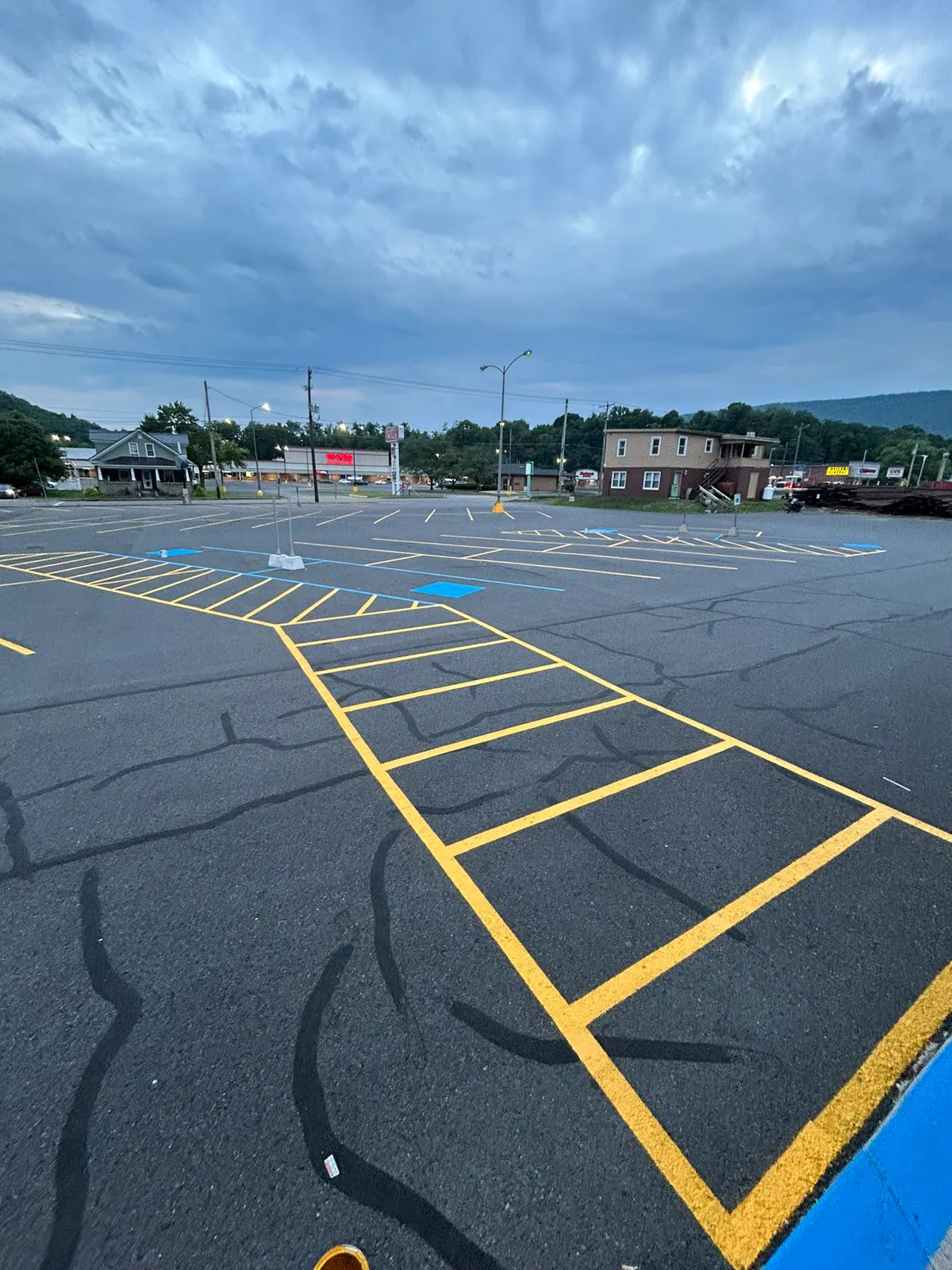
For commercial properties and parking lots, check whether your lot lines, arrows, ADA markings, and fire lane paint are still clearly visible. A winter of snow plowing and road salt can wipe out line striping faster than you would expect. Faded ADA markings in particular are a liability issue, not just cosmetic. We have a breakdown of ADA parking requirements and a real case study on what a professional re-stripe looks like if you manage commercial property.
8
Soft or spongy spots
Walk the surface and pay attention to how it feels underfoot. Any area that feels soft, bouncy, or slightly springy means the base underneath has been compromised, usually by water saturation. This is one you cannot see from a photograph. You need to actually walk it. Spongy spots under asphalt mean the structural support is gone, and that section will fail completely if it is not addressed.
What to do with what you find
Once you have walked the property and documented what is there, the next step is figuring out what actually needs professional attention versus what you can monitor for now.
Fix now: Potholes, alligator cracking, spongy spots, edge crumbling, and any drainage issues that are actively making things worse. These get worse through the summer, not better.
Schedule soon: Crack filling before sealcoating. If you are planning to sealcoat this season, cracks need to be filled and cured first. Doing them in the right order matters. Pavement Interactive explains why crack sealing before sealcoating is the correct sequence and why skipping it undermines the whole job.
Plan for this season: Sealcoating on a surface that is in otherwise decent condition. Late spring through early fall is the window in Lancaster County when temperatures are right. Wait until you have had a few dry days in a row and overnight temps are consistently above 50 degrees.
The right order to do spring repairs
One of the most common mistakes I see is people doing things out of order and then wondering why the results do not hold. Here is the sequence that actually works:
Step
When
Why This Order
1. Pothole and structural repair
First, as soon as temps allow
No point sealing a surface with holes in it
2. Crack filling
After patching, before sealing
Cracks need to be sealed before water gets in through them again
3. Sealcoating
After cracks have cured, dry weather
Seals the whole surface, including repaired areas, for uniform protection
4. Line striping
24 to 48 hours after sealcoat cures
Fresh sealcoat gives new lines the best adhesion and contrast
If you try to sealcoat over unfilled cracks, the sealcoat just bridges over them temporarily and cracks right back through within a season. If you stripe before sealing, the sealcoat covers the new lines. Order matters more than most people realize.
For commercial lots, this is also the best time to look at whether your line layout still makes sense. Sometimes a re-stripe is an opportunity to add a space, fix a confusing traffic flow, or bring ADA counts up to current requirements. We covered how that looks in practice in our post on ADA parking spaces and loading zone striping for a commercial building in Lancaster County.
📋
A note on timing for Lancaster County specifically
In Lancaster PA, the asphalt season really opens up in late April or early May when we get consistent daytime temps above 50 degrees and the ground has fully thawed. Trying to sealcoat in March when nights are still dropping below freezing means the sealcoat will not cure properly and you will be redoing it. According to PennDOT’s spring maintenance guidance, the ground in Lancaster County typically thaws fully by mid April in most years, though late winters can push that. Patience on timing means your repairs actually hold.
How much does spring asphalt maintenance cost?
People always want a ballpark before they call, which makes sense. Here is what typical spring maintenance costs look like in Lancaster County. These are ranges, not fixed prices, since every property is different.
A single pothole repair runs $75 to $300 depending on size. Crack filling on a residential driveway is typically $100 to $300 for the whole surface. Sealcoating a standard two-car driveway runs $150 to $350. For commercial lots, all of these costs scale with square footage and condition.
The math that usually convinces people is this: a $250 sealcoat done every two to three years costs roughly $100 per year and extends the pavement life by years. A full driveway repave costs $3,000 to $8,000 and could have been pushed out another 10 years with basic maintenance. That is not a sales pitch, it is just math.
Spring is the best time for asphalt work in Lancaster County. Temperatures are right, the damage from winter is fresh and visible, and you have the whole summer ahead for proper curing. Waiting until fall means another winter of water getting into cracks you already know are there.
When to call someone versus doing your own walkthrough
The checklist above is something you can do yourself with just your eyes and feet. But there are a few situations where I would say get a professional out to look before you decide anything.
If you find spongy or soft spots, alligator cracking in multiple areas, or potholes that seem to keep coming back in the same spots, those are signs of base failure that you cannot properly assess from the surface. The fix is different depending on how deep the damage goes, and getting that wrong costs more than calling someone to look in the first place.
We do free on-site assessments across Lancaster County. I will walk the property with you, tell you what I see, and give you a straight read on what needs to happen now versus what can wait. You can book that through our contact page or just call 717-808-1600.
No pressure to book anything after the visit. But most people find it useful to have someone who looks at asphalt every day tell them what they are actually dealing with before they commit to a plan.
Ready for a spring walkthrough in Lancaster County?
Free on-site assessment. We look at your driveway or lot, tell you what needs attention, and give you a clear quote. No obligation.
More from the blog
[Maintenance
What Is Sealcoating and Why Does It Matter?
](/what-is-sealcoating-and-why-does-it-matter/)[Repair
Pothole Repair vs. Full Repaving: Which One Do You Actually Need?
](/pothole-repair-vs-full-repaving-which-one-do-you-actually-need/)[Striping
How Often Should You Re-Stripe Your Parking Lot?
](/parking-lot-restriping/)[Compliance
ADA Parking Lot Requirements Every Business Owner Should Know
](/ada-parking-compliance-pennsylvania/)