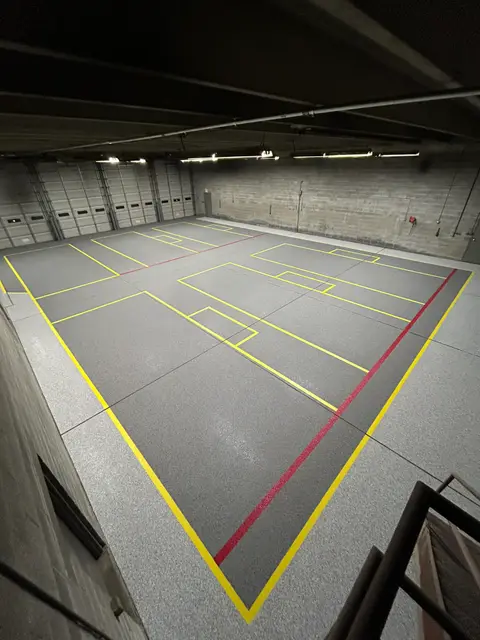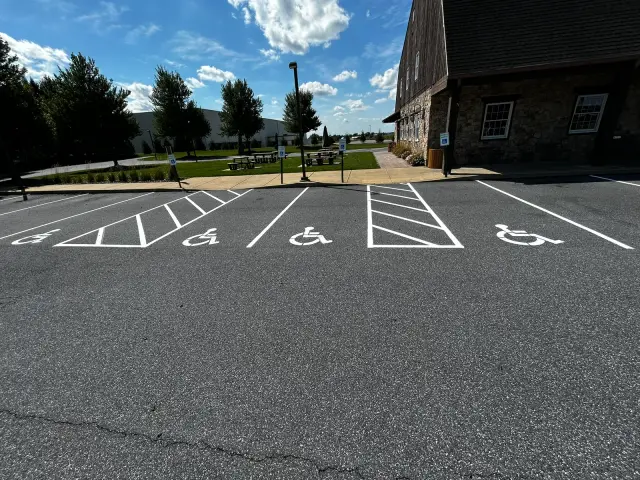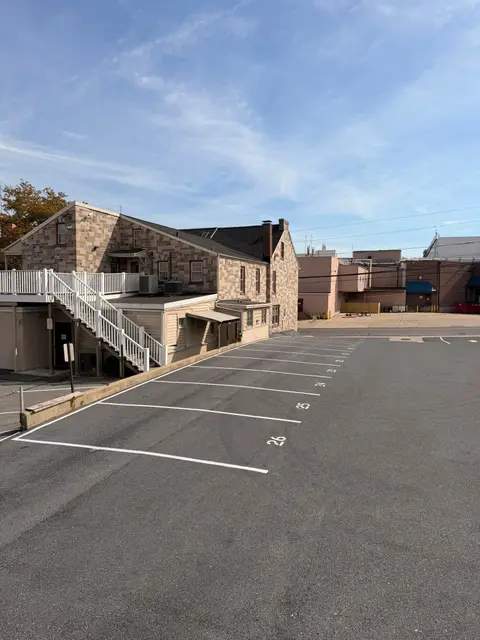
Parking lot striping, parking lot line painting, parking lot painting: the industry calls it striping, most property owners call it painting the lines, and both mean the same work. Whatever you call it, the questions are the same. What paint goes down? Should the lines be white or yellow? What do the curb colors mean? How long will it last?
This guide answers those questions for property managers, business owners and HOA boards who are planning to paint or repaint a lot.
What parking lot line painting includes
A full parking lot painting job can include any of these:
- Stall lines, single or double, straight or angled.
- Accessible (ADA) stalls, with access aisles, hatching and the symbol of access.
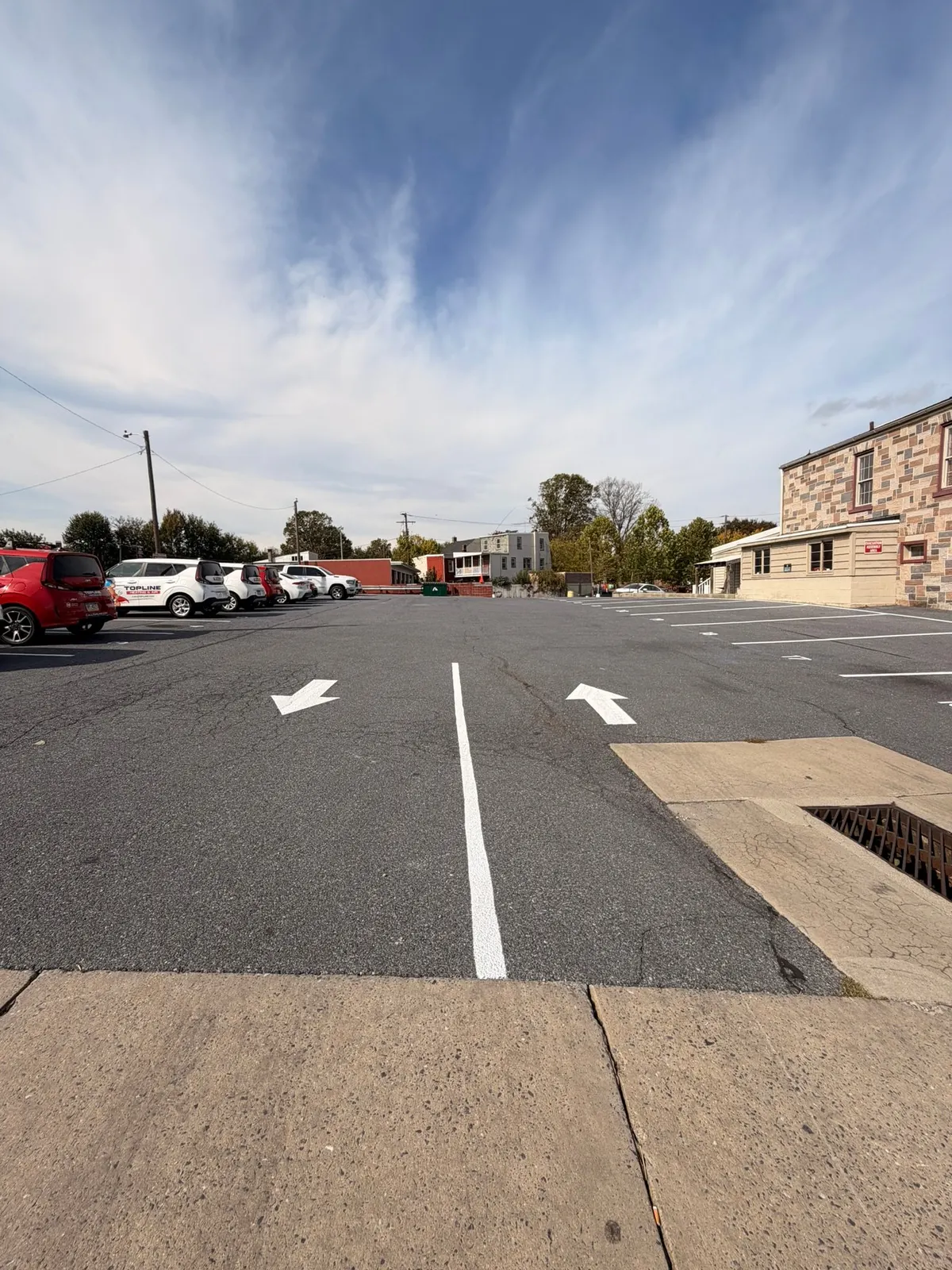
- Directional arrows, stop bars and crosswalks.
- Stencils: numbers, RESERVED, VISITOR, NO PARKING, LOADING ZONE, EV and custom wording.
- Fire lanes: painted curbs and lettering.
- Curb painting for no parking zones, loading areas and visibility.
- Hatched no parking areas and islands.
A re-stripe paints over an existing layout. A new layout measures and plans the lot from scratch. We explain both in how we stripe a parking lot.
Types of parking lot paint
Waterborne traffic paint
The most common choice for parking lots. It is an acrylic paint that thins and cleans up with water, dries quickly in warm weather, and has lower odor and fewer solvents than older paints. It is applied with an airless striping machine. On a typical commercial lot, waterborne paint is the standard.
Solvent-based traffic paint
Uses solvents instead of water. It can be applied in cooler temperatures and bonds well to some surfaces, but it has stronger fumes and more environmental restrictions. Its use has declined in many areas.
Thermoplastic
A solid material that is heated and applied hot, then hardens as it cools. It is very durable and is common on public roads for crosswalks, stop bars and arrows. It costs more and needs special equipment, so it is used selectively on parking lots, usually for high wear markings like crosswalks.
Reflective beads
Small glass beads can be dropped onto wet paint to make lines reflect headlights at night. They are standard on roads and useful in lots with heavy night traffic.
Floor marking paint
Indoor warehouse and shop floors use coatings made for concrete, not asphalt traffic paint. That is a separate job, covered in our warehouse floor line marking guide.
Paint on fresh sealcoat
If a lot is being sealcoated, the sealer goes down first, then the lines. Fresh sealer needs to cure, usually 24 to 48 hours depending on weather, before it is painted. Paint on uncured sealer can bleed and fail. Lines painted before sealcoating are covered and have to be painted again. The order is: fill cracks, repair holes, seal, then paint.
What the line colors mean
There is no single law that sets the color of every stall line on private property, but there are strong conventions.
- White is the standard color for parking stall lines in the national roadway manual (the MUTCD) and is common on lots where a crisp, clean look is wanted, especially on fresh black sealer.
- Yellow is very common on private lots in Pennsylvania, especially on older or gray asphalt where it shows up better. It is also used for hatched no parking areas, center lines in two-way drive aisles and caution markings.
- Blue is used for accessible parking: the background of the symbol of access and, often, the stall outline and aisle hatching.
- Red is usually used for fire lanes and no parking zones, where the local fire official requires it.
The most important rule is consistency. Pick a color scheme and use it across the whole lot. A mix of old yellow and new white lines confuses drivers and looks unfinished.
Line and stall sizes
Common practice on commercial lots:
- Line width: four inches is the standard width for stall lines. Some lots use wider lines for emphasis.
- Stall width: typical standard stalls are around eight and a half to nine feet wide. Compact stalls are narrower.
- Stall depth: often around eighteen feet for standard stalls, depending on the angle and the layout.
- Drive aisles: two-way aisles need room for two cars to pass and for cars to back out of stalls.
Local zoning codes often set minimum stall and aisle dimensions for new lots, so check your municipality when laying out a new lot or changing a layout. Accessible stalls have their own dimensions, set by the ADA Standards. See our ADA parking requirements guide for the details.
Curb painting: what the colors mean
Curb colors are set by local rules, not one national standard, and they differ from town to town. That said, these are the most common meanings:
| Curb color | Usual meaning |
|---|---|
| Red | No stopping or parking, often a fire lane |
| Yellow | Loading zone or no parking, sometimes general caution |
| Blue | Accessible parking only |
| White | Short-term passenger pickup and drop-off |
| Green | Short-term or limited time parking |
Some of these meanings come from specific states and cities, so do not assume a color has legal force on its own. For fire lanes in particular, the municipality and the fire official decide the color, the wording and where the lane runs. We cover that in fire lane marking in Pennsylvania.
Curbs are also painted simply for visibility, for example a yellow band on a curb or island that drivers keep hitting, or the edge of a step at a storefront.
How long parking lot paint lasts
Paint life depends on traffic, weather, the surface underneath and the paint itself.
- High traffic areas (entrances, drive aisles, stalls in front of the doors) wear fastest.
- Snow plows and salt take paint off curbs and lines along drive aisles every winter.
- Paint on a clean, sound, sealed surface lasts longer than paint on dirty or crumbling asphalt.
- Thin coats wear through quickly.
Most commercial lots look their best with fresh lines every one to two years. Retail, restaurant and medical lots often need yearly touch ups in the busiest areas. Our guide to how often to re-stripe a parking lot has a quick test you can do yourself.
When parking lot painting is done
- Temperature: traffic paint needs the surface and air above roughly 50 degrees Fahrenheit.
- Dry surface: no rain, no dew. On cool nights, watch the dew point.
- Timing: retail and restaurant lots are often painted at night or early morning. Offices, churches and schools are often painted on quiet days.
- Season: spring through fall in Lancaster County.
Choosing a contractor for parking lot line painting
Ask these questions:
- Do you lay out lines with measurements and chalk, or paint by eye?
- What paint do you use, and how thick do you apply it?
- How do you handle ADA stalls, and do you check the required count?
- How do you keep the lot open while you work?
- Do you black out old lines when the layout changes?
- What weather do you need?
- Will I get the price and scope in writing?
The finished job should have straight lines of consistent width, clean ends, square stencils and no tracked paint. Our list of the 10 most common striping mistakes shows what to look for.
Planning a repaint around tenants and customers
A repaint is simple for the crew and disruptive for everyone else if it is not planned. A few steps make it painless.
- Give notice. Tell tenants, staff and regular delivery drivers which areas will be closed and when, a few days ahead.
- Pick the time. Retail and restaurant lots are best done overnight or before opening. Offices are easier on a weekend. Churches are easiest midweek.
- Work in sections. Most lots can stay partly open, with cones around the area being painted and a clear path for traffic.
- Move the cars. The area being painted has to be completely empty. Cars left overnight are the most common reason a section gets skipped.
- Check the weather together. If rain or a cold, damp night is forecast, the crew should reschedule rather than paint anyway.
Our checklist for getting a property ready for striping day covers this step by step.
Frequently asked questions
Is parking lot striping the same as parking lot painting?
Yes. Striping is the trade name; painting the lines is how most people describe it.
White or yellow lines?
Either works. White gives strong contrast on fresh black sealer; yellow shows well on older gray asphalt. Be consistent across the lot.
How long does the paint take to dry?
Waterborne traffic paint is usually dry to the touch within an hour in warm, dry weather. Lots reopen the same day.
Can you paint over old lines?
Yes, if the layout stays the same. If it changes, old lines should be blacked out so drivers do not follow them.
Do I need permission to repaint my lot?
Repainting an existing layout generally does not need approval. Changing the layout, adding or removing accessible stalls, or changing fire lanes may involve your municipality.
Ready to repaint your lot?
Lancaster Lines & Asphalt paints parking lot lines, stencils, ADA stalls, fire lanes and curbs across Lancaster County, by day or overnight, with the layout checked before any paint goes down. See our parking lot striping and line painting page or request a free quote.