Call us: (717) 454-9931

The Misunderstood Science of Blacktop
If you ask the average homeowner in Lancaster what sealcoating is, they will likely say, “It’s like painting your driveway to make it look new.”
They aren’t entirely wrong—aesthetics are a benefit—but they are missing 90% of the picture. Viewing sealcoating as “paint” is a financial mistake that costs property owners in Pennsylvania millions of dollars annually in premature repaving costs.
At Lancaster Lines & Asphalt, we approach pavement maintenance not as painters, but as asset managers. To understand why sealcoating matters, you have to stop looking at your driveway as a rock slab and start looking at it as a complex chemical structure that is under constant attack.
In this comprehensive guide, we are going deep. We will explore the chemical degradation of bitumen, the engineering standards set by the ASTM (American Society for Testing and Materials), the economic lifecycle analysis used by civil engineers, and the real-world experiences of Pennsylvania property owners.
This is everything you need to know about the liquid armor that protects your investment.
The Chemistry of Degradation (What Scientists Say)
To understand the cure, you must understand the disease. Why does asphalt turn gray and crack? It is not just “getting old.” It is a chemical reaction known as Oxidative Hardening.
1.1 The Binder: Maltenes vs. Asphaltenes
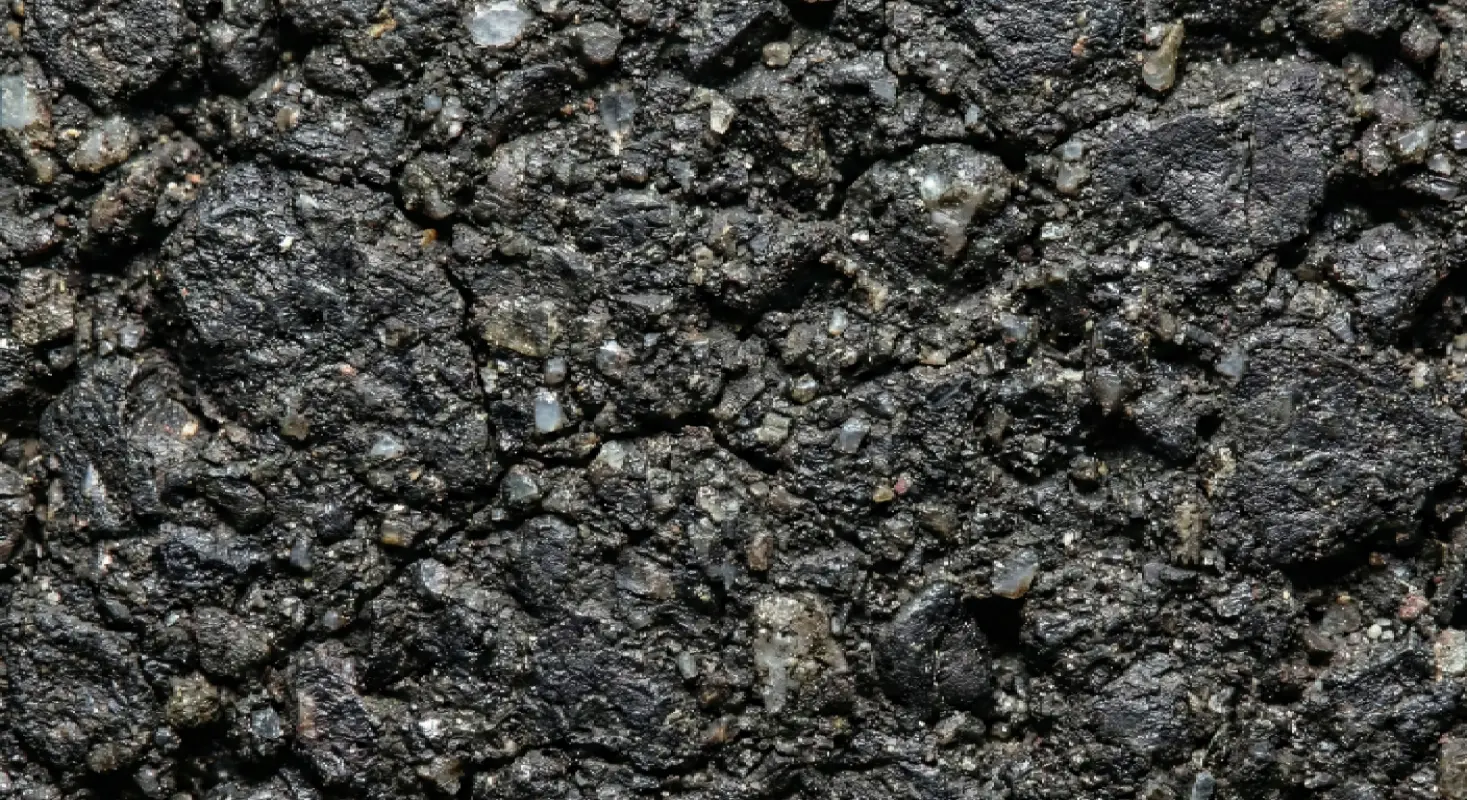
Asphalt pavement consists of 95% aggregate (stone/sand) and 5% binder (bitumen/asphalt cement). That black glue is a petroleum product composed of two main chemical groups:
- Asphaltenes: These give the asphalt its body, structure, and black color.
- Maltenes: These are the oily, resinous components that give asphalt its flexibility and adhesiveness.
1.2 The Attack of UV Radiation
According to research from the National Center for Asphalt Technology (NCAT), when ultraviolet (UV) rays from the sun hit fresh asphalt, they trigger a photo-oxidation reaction. The UV rays break the carbon bonds in the Maltenes. Essentially, the sun evaporates the oils.
- The Result: The asphalt loses its flexibility. It becomes brittle.
- The Visual: This is why asphalt turns from black to gray. The gray color is simply the bleached aggregate showing through because the black carbon binder has eroded.
1.3 Water: The Universal Solvent
Once the binder becomes brittle, micro-cracks form. This allows water to penetrate. In Pennsylvania, we experience freeze-thaw cycles. Water enters the pore, freezes, expands by 9%, and ruptures the bond between the stone and the oil. This is called “raveling” (when loose stones start appearing on your driveway).
The Scientific Conclusion: Sealcoating is not paint. It is a sacrificial barrier. It is designed to take the beating from UV rays and oxidation so that the structural asphalt underneath remains rich in Maltenes and flexible.
What Exactly IS Sealcoat?
Sealcoat is a specially formulated liquid emulsion applied to the surface of asphalt. But not all buckets are created equal.
2.1 The Composition
A professional-grade sealcoat (like the ones we use at Lancaster Lines & Asphalt) is a precise recipe:
- The Base: Either Refined Tar or Asphalt Emulsion (AE). This replaces the binder on the surface.
- Water: The carrier vehicle that evaporates during curing.
- Mineral Aggregate (Sand): Crucial. We add silica sand to the mix. This provides “skid resistance” (traction) and solids content to fill small hairline cracks. Without sand, the sealer is slippery and weak.
- Additives (Latex/Polymers): These are the “steroids” for sealcoat. They improve elasticity, allowing the coating to flex with the pavement during temperature swings.
2.2 The Standards: ASTM and FAA
Legitimate contractors follow strict federal specifications. If a contractor cannot tell you what ASTM standard their material meets, run away.
- ASTM D5727: Standard Specification for Emulsified Refined Coal Tar.
- FAA P-608: The Federal Aviation Administration’s gold standard for asphalt emulsions used on airport runways.
If it’s good enough for a Boeing 747 landing at high speed, it is good enough for your driveway. We adhere to these mix designs to ensure durability.
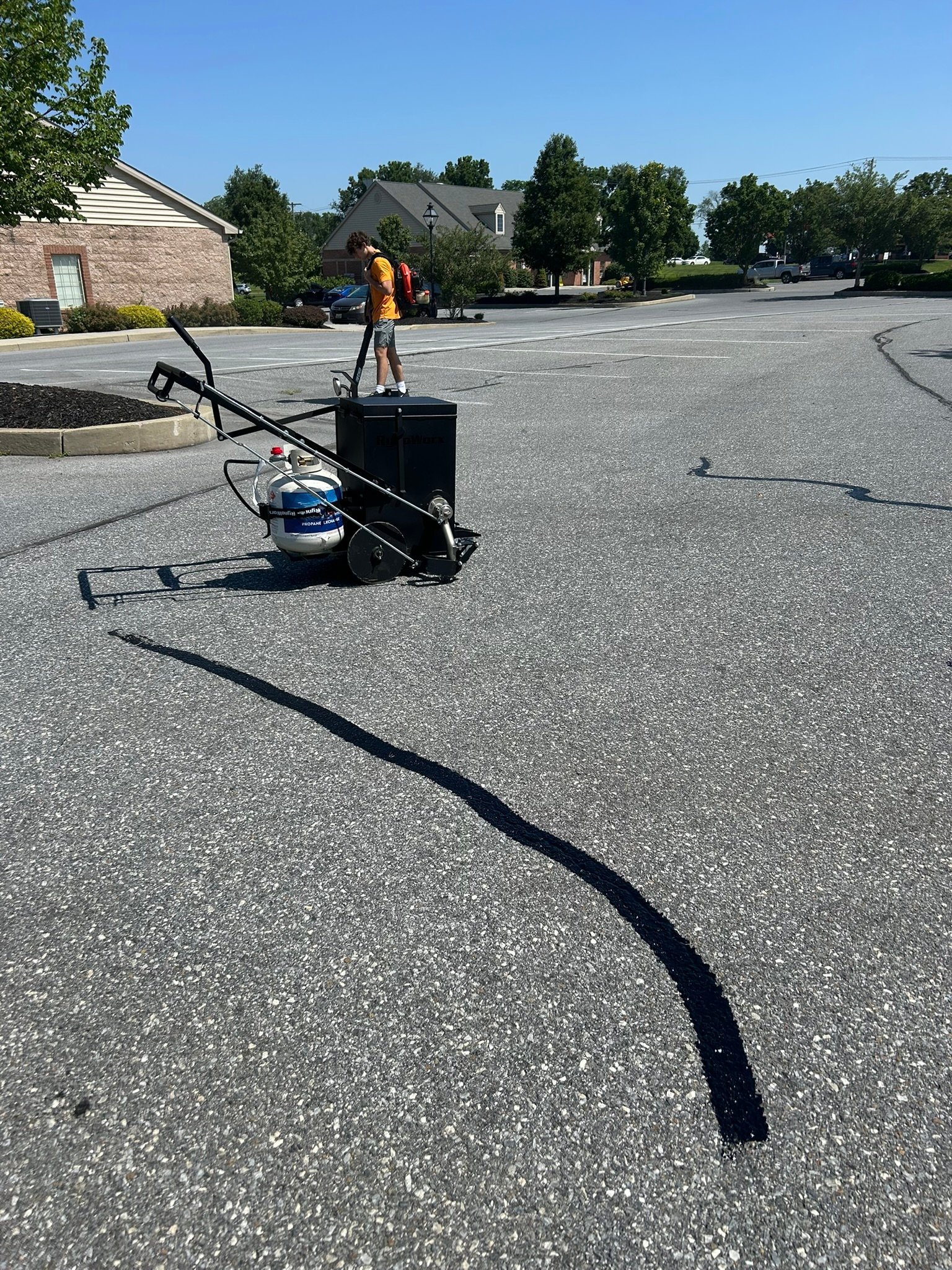
Learn about our Crack Filling Services which must be done BEFORE sealcoating]
The 5 Strategic Benefits of Sealcoating
Why should you spend money on this? Here is the breakdown of the Return on Investment (ROI).
1. Waterproofing (The Hydrophobic Barrier)
Asphalt is naturally porous. Sealcoat fills the surface voids, creating a hydrophobic (water-repelling) layer. This stops water from reaching the sub-base. A dry sub-base is a strong sub-base.
2. UV Sunblock
Think of sealcoat as SPF 50 for your pavement. It blocks the UV rays from reaching the underlying asphalt binder, effectively stopping the oxidation process. This keeps the pavement flexible for years longer.
3. Resistance to Oil and Gas
Asphalt is a petroleum product. Gasoline is a solvent. If gas drips on bare asphalt, it chemically dissolves the glue—literally melting a hole in your driveway. Many sealcoat formulations (especially refined tar) are chemically resistant to gas/oil. They provide a buffer zone, giving you time to clean up a spill before it destroys the pavement.
4. Friction and Safety
By mixing silica sand into our sealer, we restore the texture of the pavement. Smooth, worn-out asphalt can be slippery in the rain. A fresh sealcoat with proper aggregate load increases the coefficient of friction, reducing slip-and-fall liability.
5. Aesthetics and Property Value
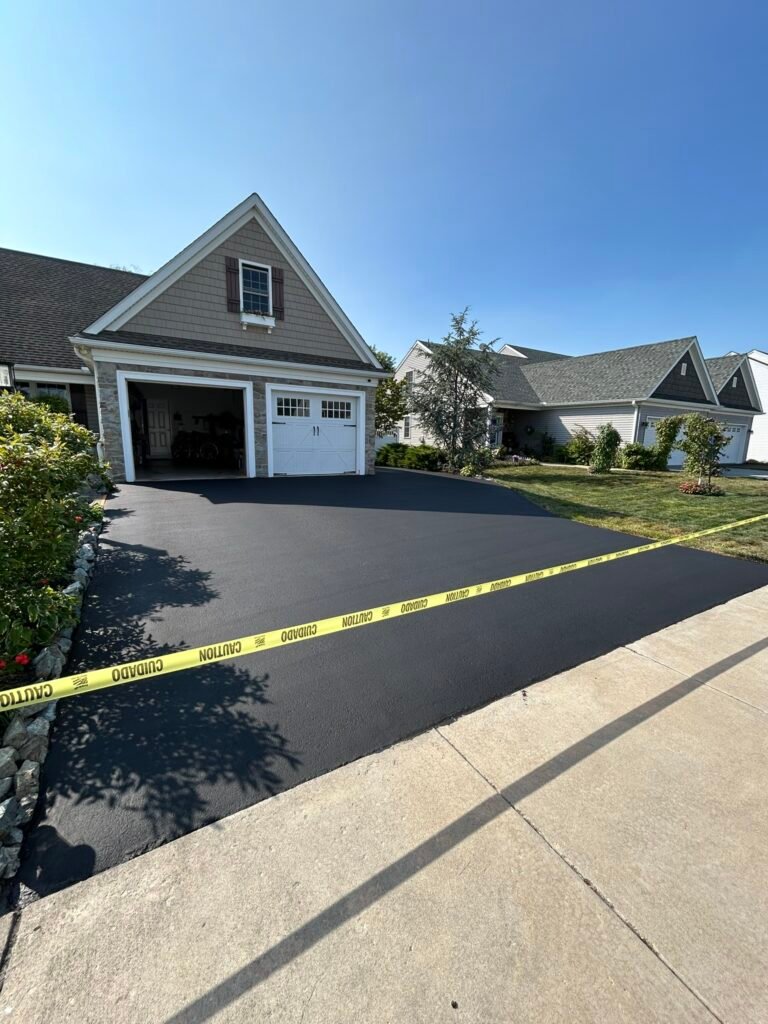
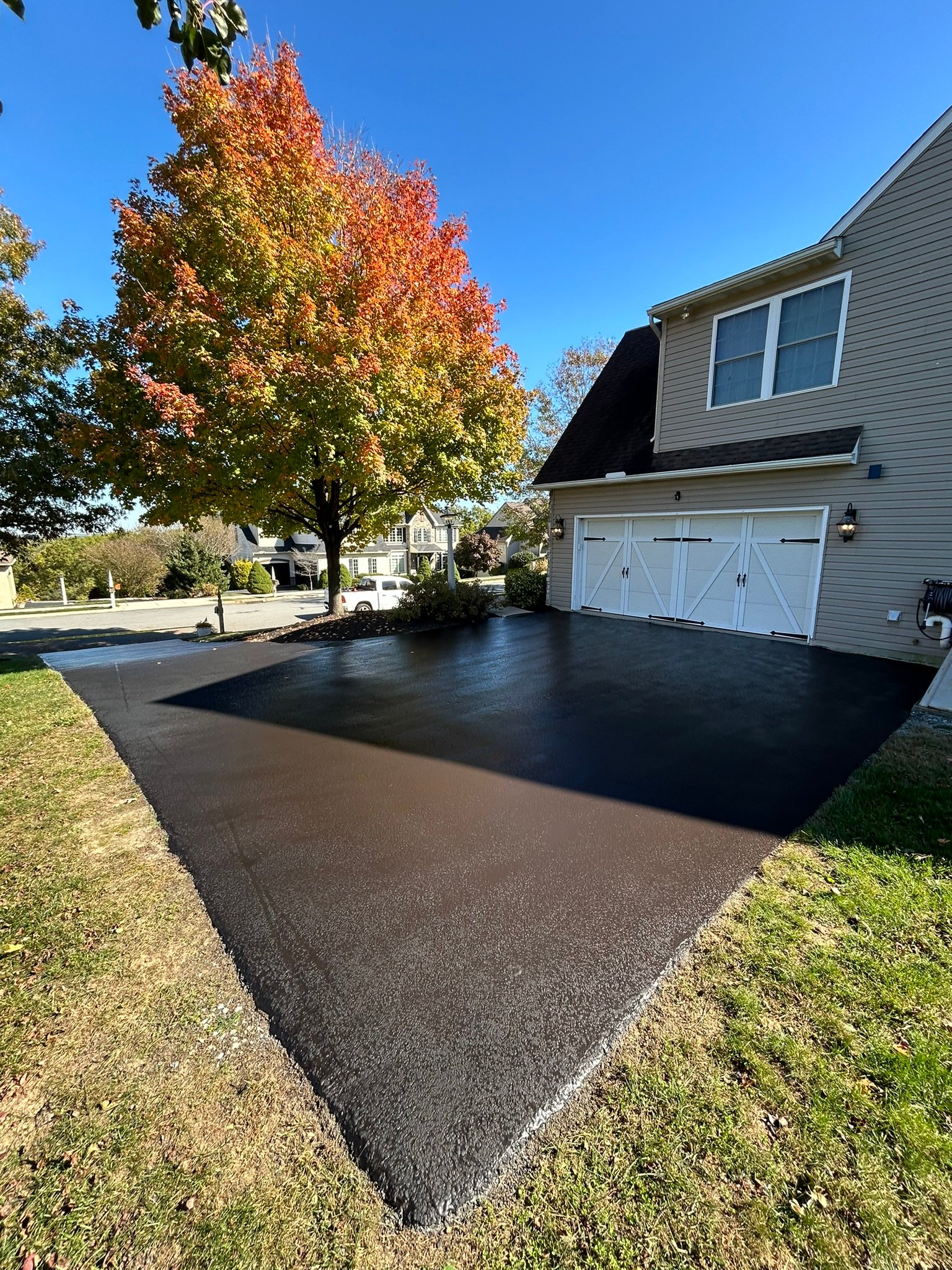
This is the “Regular Person” benefit. A jet-black driveway contrasts beautifully with green grass and white siding. It looks expensive. Real Estate Insight: According to realtors, a maintained driveway can increase perceived property value by up to 5%. It signals to a buyer: “This home was well cared for.”
The Voice of the People (Real World Feedback)
It’s one thing to hear engineers talk about polymers. It’s another to hear from property owners in Lancaster County.
The Commercial Property Manager’s View:
“We manage a shopping plaza in Ephrata. We used to repave every 12 years like clockwork. Since switching to a 3-year sealcoat cycle with Lancaster Lines & Asphalt, our current lot is 18 years old and still passing inspection. It saved our budget.” — Mike T., Property Manager
The Homeowner’s View:
“I thought my driveway was too far gone. It was gray and had loose stones. I was quoted $8,000 for a new driveway. Lancaster Lines & Asphalt came out, crack-filled it, and sealcoated it for a fraction of that price. It looks brand new.” — Sarah Jenkins, Lititz Resident
The Application Process (How We Do It)
This is where the difference between a DIY bucket and a professional job becomes obvious.
Step 1: Violent Cleaning
The sealer will not bond to dirt. We use high-powered blowers, steel wire rotary brooms, and sometimes pressure washers to scour the surface. We also treat oil spots with a petrochemical primer so the sealer doesn’t peel.
Step 2: Hot Rubber Crack Filling
This is non-negotiable. Sealer does not fix cracks. If you seal over a crack, it will reappear in 2 weeks. We fill structural cracks with hot-pour rubberized sealant first.
Step 3: The Mix Design
We mix the sealer, sand, water, and latex additive in our tank on-site. The agitation system keeps the sand suspended so the texture is uniform.
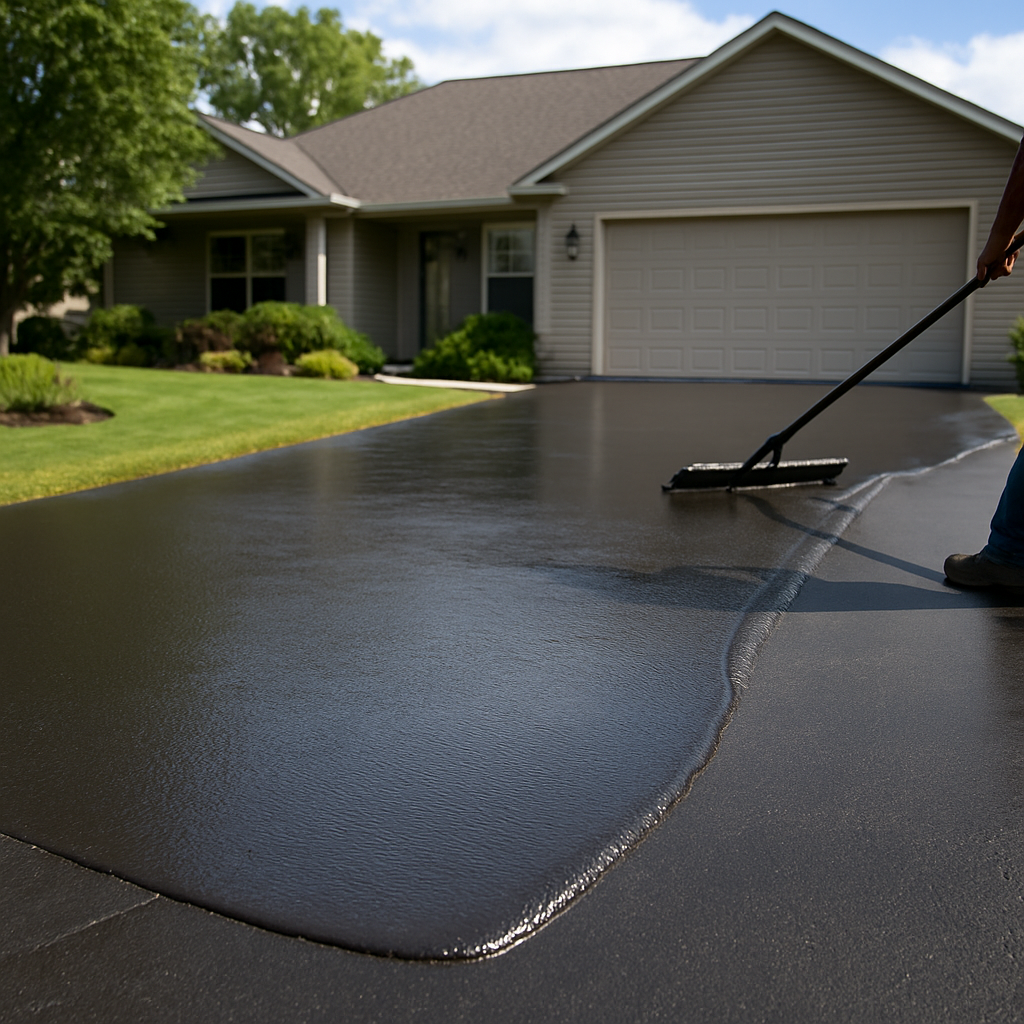
Step 4: Application (Spray vs. Squeegee)
- Squeegee Method: Best for rough, porous asphalt. The rubber blade forces the material deep into the voids.
- Spray Method: Best for smooth surfaces or the second coat. It provides a flawless, streak-free finish and precise edging.
- The Hybrid Approach: For the best results, we often squeegee the first coat (to fill voids) and spray the second coat (for aesthetics).
Step 5: Curing
We block off the area. In ideal Pennsylvania summer weather, you can walk on it in 4-6 hours and drive on it in 24-36 hours.
After sealcoating, you need fresh lines. Check out our Line Striping Services
The Economics of Preservation (Pavement Lifecycle)
Let’s talk numbers. The Asphalt Institute has conducted extensive lifecycle cost analysis (LCCA).
Scenario A: The “Do Nothing” Approach
- Year 0: New Pavement Installed ($3.00/sq ft).
- Year 5: Oxidation sets in. Hairline cracks appear.
- Year 8: Major cracking and potholes.
- Year 12: Structural failure. Requires full removal and replacement.
- Total Cost over 15 years: $6.00+ per sq ft (Initial install + Replacement).
Scenario B: The Maintenance Program
- Year 0: New Pavement.
- Year 2: Sealcoat ($0.20/sq ft).
- Year 5: Sealcoat ($0.25/sq ft).
- Year 8: Sealcoat ($0.30/sq ft).
- Year 12: Sealcoat ($0.35/sq ft).
- Year 15: Pavement is still in Good/Fair condition.
- Total Cost over 15 years: $4.10 per sq ft.
The Conclusion: A proactive maintenance program costs significantly less than replacement. You are spending pennies to save dollars.
Myths vs. Facts
Myth: “Sealcoating is just for looks.” Fact: False. While it looks good, its primary function is chemical protection against UV and water damage.
Myth: “I can do it myself with Home Depot buckets.” Fact: DIY sealers typically contain 15-20% solids. Professional sealers contain 45-50% solids plus latex additives and sand. A DIY job will last 6 months; a pro job lasts 3-4 years.
Myth: “New asphalt needs to be sealed immediately.” Fact: NO! New asphalt needs to cure for 6-12 months (a full winter season) to allow the light oils to evaporate. If you seal it too soon, the asphalt stays too soft and can track.
Conclusion: Protect Your Territory
Your home or business is your territory. The pavement is the gateway to that territory.
In Pennsylvania, nature is trying to reclaim your driveway. The sun cooks it, the rain erodes it, and the ice shatters it. Sealcoating is the only scientifically proven defense to halt this process.
Don’t wait until the stones start popping out. By then, the damage is done.
Ready to protect your investment? Lancaster Lines & Asphalt provides engineering-grade pavement maintenance for residential and commercial clients across Lancaster, York, and Ephrata.
Contact us today for a Free Pavement Assessment and Quote