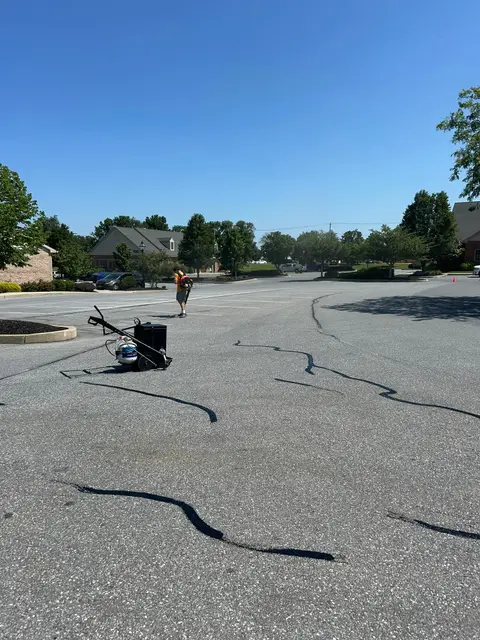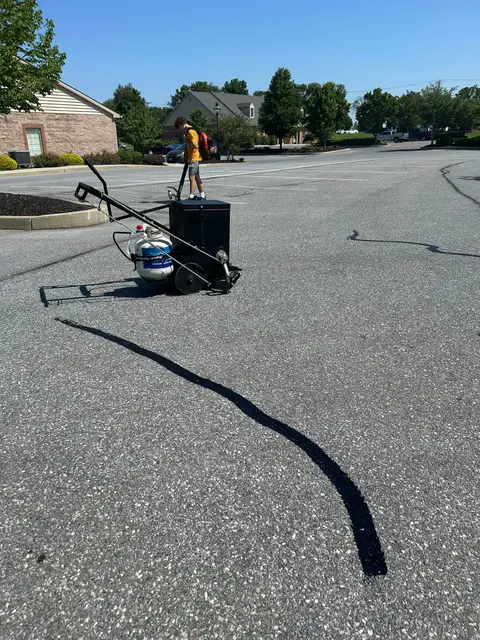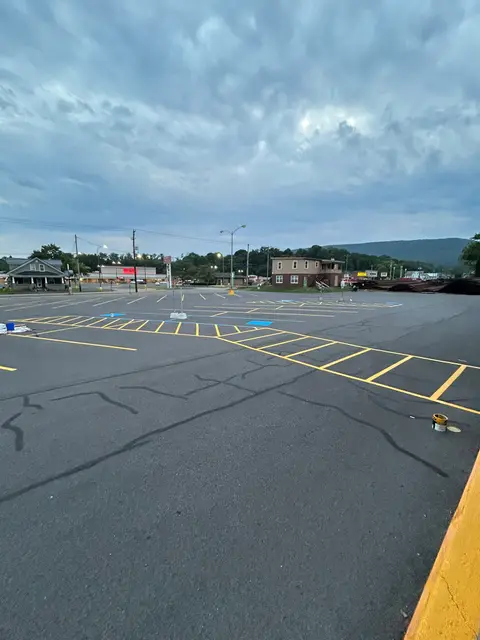

Cracks are how a parking lot tells you it is getting older. On this commercial property, long cracks ran across the drive aisle and the parking area, some of them winding for the full width of the lot. None of them were potholes yet. That is exactly the moment to seal them, because a sealed crack costs a few dollars a foot and a pothole costs hundreds.
What the cracks were doing
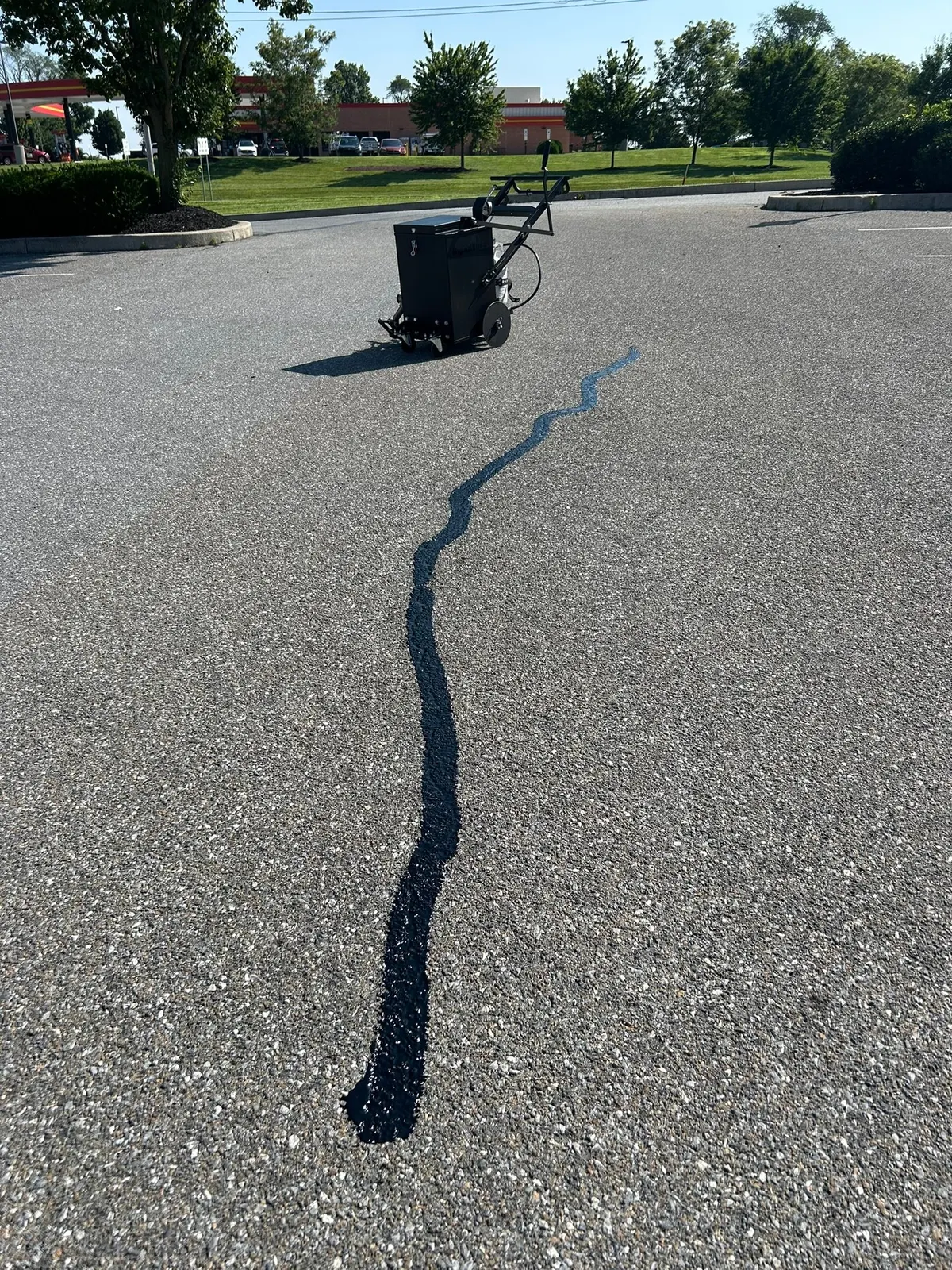
The lot surface was in decent shape overall: solid, no alligator cracking, no soft spots. The problem was water. Every crack wider than a hairline is an open door. Rain and snowmelt run in, soak into the stone base under the asphalt, and then freeze. Ice expands, pushes the pavement apart, melts and leaves a void. Lancaster County gets dozens of these freeze and thaw cycles each winter, and each one makes the crack a little wider and the base a little weaker. Left alone for a winter or two, the edges of a crack like this start to break off and the first pothole appears.
The owner called before that happened, which is the cheapest possible version of this story.
Why hot pour, not a bottle of filler
There are two kinds of crack filler. The cold pour product you can buy at a hardware store is poured from a jug, dries by evaporation and tends to shrink, crack and pull away from the sides within a season or two. Hot pour sealant is a rubberized material that we heat in a melter to around 400 degrees Fahrenheit. It flows into the crack as a liquid, bonds to the sides, and cures into a flexible rubber that moves with the pavement as temperatures swing. In our climate that flexibility is the whole point. A rigid filler cracks the first winter.
How the job went
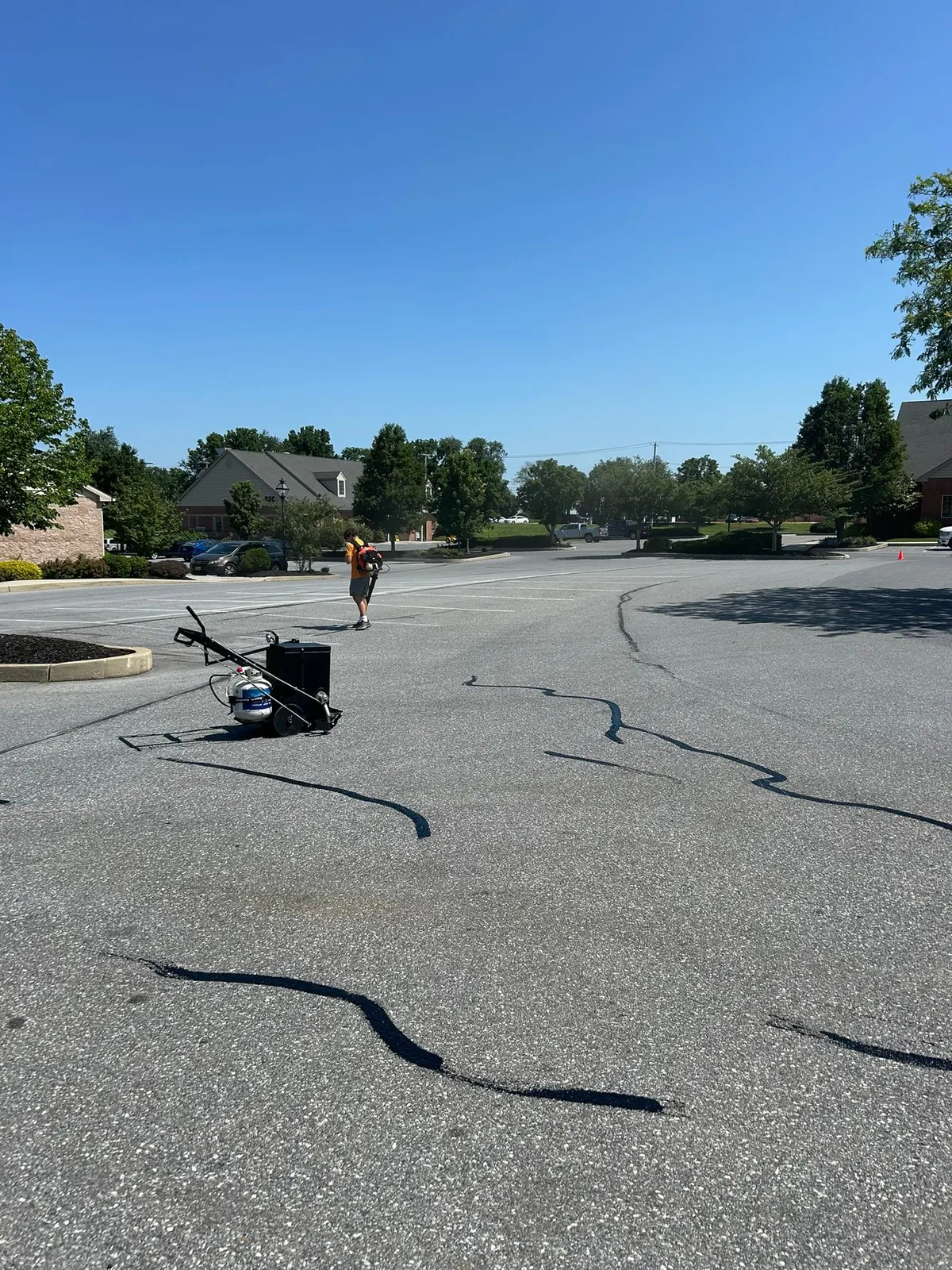
Cleaning. The sealant only bonds to a clean, dry surface. We blew the cracks out with compressed air to remove dirt, sand and loose asphalt, and cleared out any vegetation that had taken root. Where cracks were packed with debris, we routed them out so the sealant would reach the full depth. This step is slow and it is the step that gets skipped on cheap jobs. If you seal over dirt, the rubber bonds to the dirt, not the asphalt, and lifts out the following spring.
Heating. The melter brought the rubber up to application temperature. The material has a working range, and keeping it in that range is what gives a smooth, even bead that bonds properly.
Filling from the bottom up. We filled each crack with a pour pot and wand, working along the crack so the sealant reached the bottom and came up flush rather than bridging the top and leaving a void underneath. A void under the surface is a future failure.
Striking off. As we went, the sealant was struck off flush with the pavement, leaving a band that is level with the surface. A raised bead gets caught by plow blades and tires. A flush band does not.
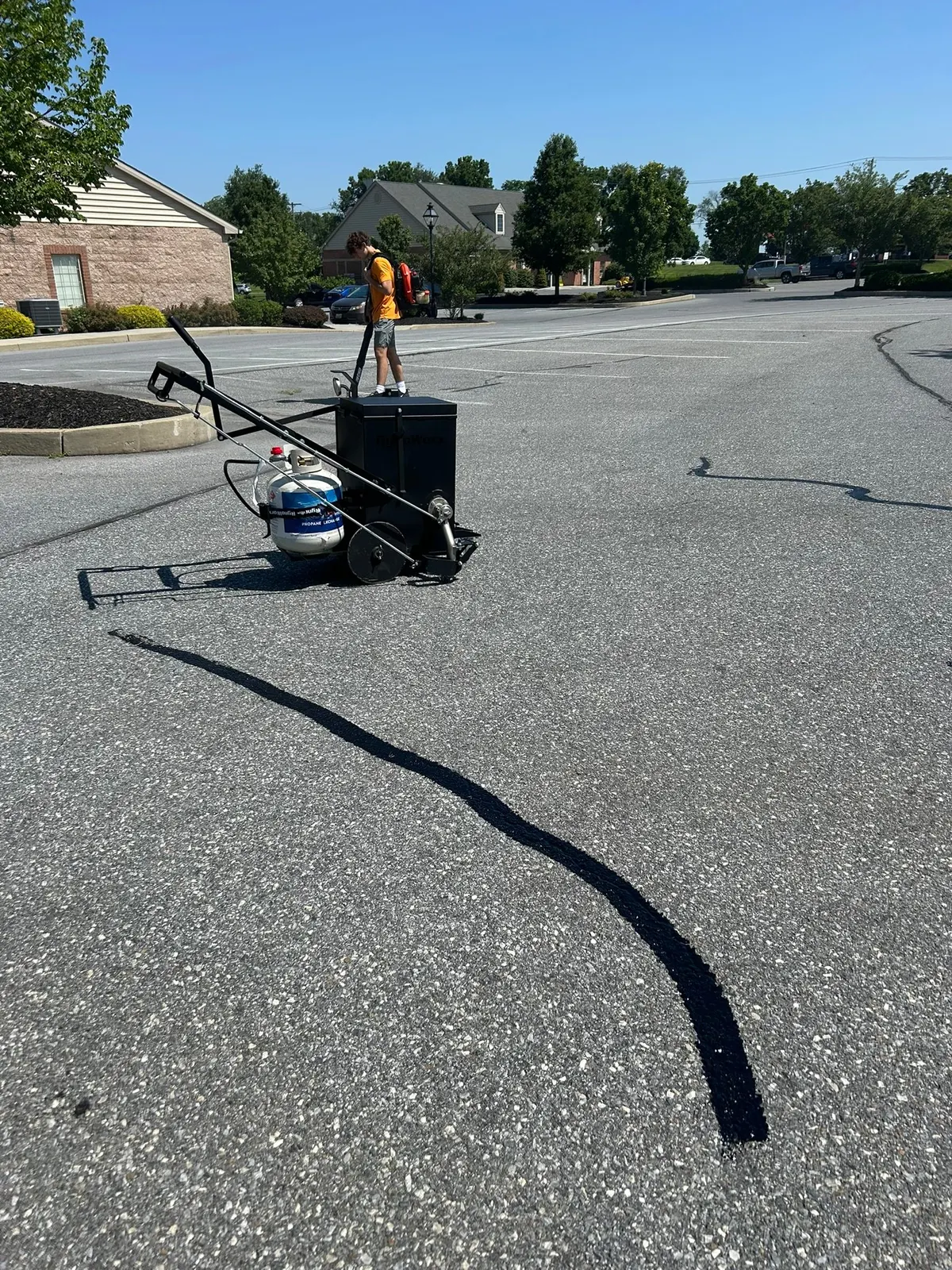
Cure and reopen. Hot pour cures quickly. Within a short time after the last crack was sealed, the lot could take traffic again. The black lines across the lot in the photos are the sealed cracks.
The entrance drive
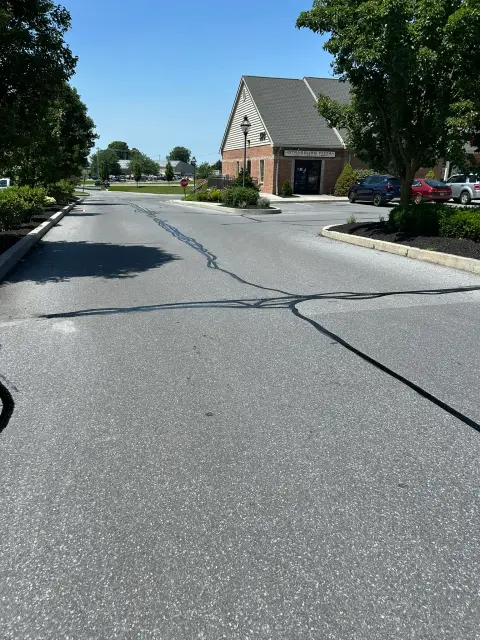
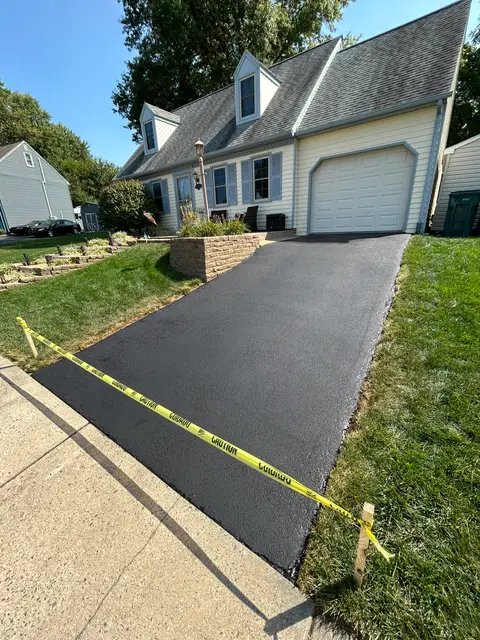
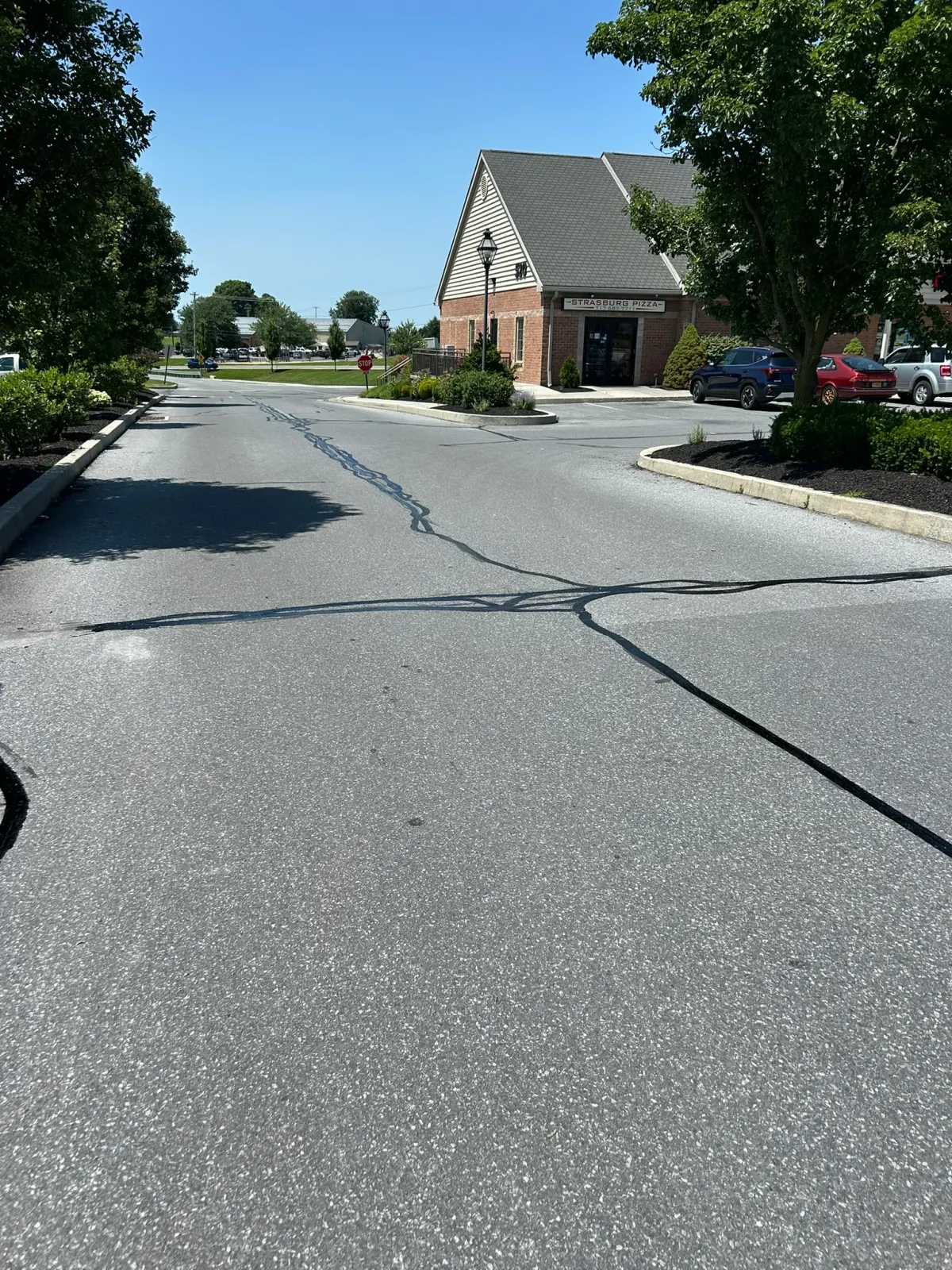
The long entrance drive had its own cracks, including a long one running down the length of the drive where the two paving passes had met years ago. Longitudinal joints like this open up on almost every lot eventually. We sealed the full length so water cannot work down into the base along the seam.
What sealing does and does not do
Sealing a crack is not a cosmetic fix and it does not make the crack disappear. It leaves a visible black band across the pavement. What it does is stop the water, which stops the damage. On a lot that is otherwise sound, that is the single most cost effective maintenance you can buy.
What it does not fix:
- Alligator cracking. A web of interconnected cracks means the base has failed. That area needs to be cut out and rebuilt, not sealed.
- Potholes. Once the surface has broken through, it needs a proper patch.
- Sunken areas and drainage problems. Sealant does not change the grade.
We tell owners when a crack is beyond sealing. On this lot, none of them were.
Timing: why fall is the right season
Cracks are at their widest in cold weather, because the asphalt contracts. Sealing in the fall means the rubber goes in when the crack is open, so it is not squeezed out when the pavement expands again in summer. It also means the lot goes into winter protected. Spring is the second best time. Summer sealing works, but the cracks are at their narrowest and take less material.
If a lot is also due for sealcoating, crack sealing comes first. Sealcoat is a thin surface coating and does not fill cracks. Seal the cracks, then coat the surface, then paint the lines. That order protects the pavement at every step.
What the owner can expect
- The sealed cracks will stay sealed through several winters. Hot pour rubber holds up far longer than cold pour.
- The sealant stays flexible, so it does not crack when the pavement moves.
- The lot does not develop potholes along these cracks, which is the money saved.
- New cracks will appear over time, because asphalt ages. A yearly walk of the lot each fall catches them while they are still cheap.
How to walk your own lot for cracks
You do not need us to tell you whether your lot has cracks worth sealing. A ten minute walk in good light will do it. Look for:
- Width. Cracks narrower than a pencil lead are hairlines and usually too tight to seal. Cracks you can fit a pencil or a credit card edge into are open to water and should be sealed. Cracks wider than an inch or two with crumbling edges may need patching rather than sealing.
- Vegetation. Grass or weeds growing out of a crack mean soil and water are already in it.
- Water. After a rain, look for cracks that stay dark and wet longer than the surrounding pavement. Water is sitting in them.
- Pattern. A single long crack is a candidate for sealing. A web of small connected cracks, the pattern people call alligator cracking, is a base failure and needs a different repair.
- Location. Cracks in the drive aisles and at the entrance see the most traffic and get worse fastest.
The kinds of cracks on a lot like this
Different cracks come from different causes, and knowing which is which tells you what to expect.
Transverse cracks run across the pavement, roughly perpendicular to traffic. They come from the asphalt shrinking in cold weather and are the most common cracks on a Lancaster County lot. The long cracks across this lot were transverse.
Longitudinal cracks run with the direction of traffic. They often follow the seam where two paving passes met, as on the entrance drive here, or form in the wheel paths from load.
Edge cracks run along the outside edge of the pavement where there is no curb to support it. They come from the base washing out or being driven over.
Block cracks divide the pavement into large rectangles. They come from the asphalt aging and shrinking, usually on lots that get little traffic.
Alligator cracks are the web pattern. They mean the base under the asphalt has failed, and sealing them is a waste of money. That area needs to be cut out and rebuilt.
The first four can be sealed. The last one cannot.
How a job like this is priced
Hot pour crack sealing is priced by the total length of crack, plus how much cleaning and routing the cracks need. Wide, packed cracks take longer than clean hairline-to-pencil width ones. On a commercial lot we measure on site and put the price in writing. If the lot is also due for sealcoating, doing both in one visit saves a second trip. More on how crack sealing is priced is in crack filling cost in Lancaster County.
If the lot is also due for sealcoating, bundling the two into one visit saves the second trip.
Questions owners ask about crack sealing
How long will the sealed cracks last?
Several winters. Hot pour rubber stays flexible and bonded far longer than cold pour products. Eventually the pavement moves enough that a sealed crack may reopen at the edge, and it can be resealed.
Will the black lines go away?
No. Sealed cracks are visible as black bands until the lot is sealcoated, which covers everything in a uniform black. Many owners sealcoat the season after sealing cracks.
Can you seal cracks in cold weather?
The cracks have to be clean and dry, and the pavement should be above freezing. Fall is ideal. Mild, dry winter days can work for small jobs. Wet or frozen pavement does not.
Should we fix the cracks or wait and patch the potholes?
Fix the cracks. Sealing costs a few dollars a foot. A pothole repair starts in the hundreds, and the pothole takes part of the base with it. See why your driveway gets potholes every spring for how one turns into the other.
Details
- Commercial parking lot and entrance drive with long transverse and longitudinal cracks.
- Cracks blown clean and routed where needed, then filled with hot rubberized sealant from the bottom up and struck off flush.
- Done ahead of winter so water stays out of the base through the freeze and thaw season.
- Lot reopened to traffic shortly after the work was finished.
Lancaster Lines & Asphalt seals cracks on commercial lots and driveways across Lancaster County. If you can see cracks wider than a pencil in your pavement, now is the time. See the crack filling page for pricing and process, or request a free quote.