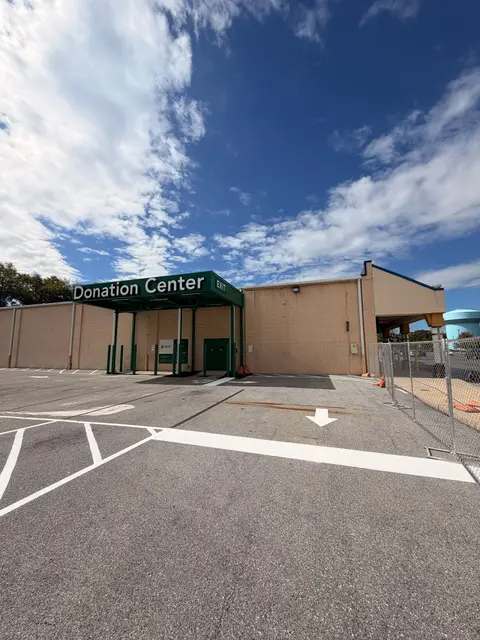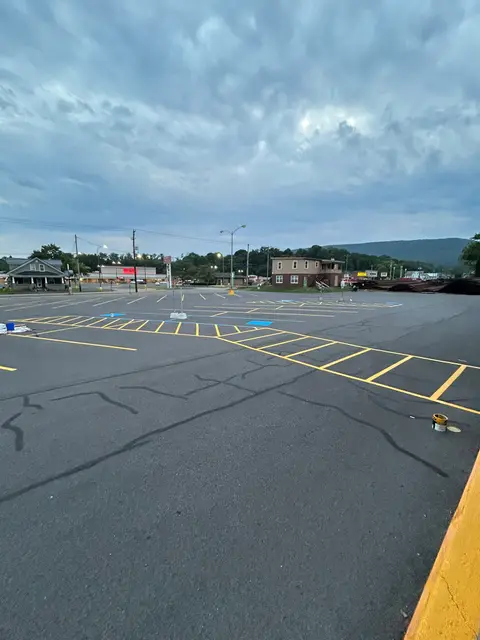

A donation center parking lot does two jobs at once. It is a parking lot for shoppers and staff, and it is a drop-off lane for people pulling up with a trunk full of boxes. Those two kinds of traffic want different things. Shoppers want a stall near the door. Donors want to pull right up to the canopy, unload, and leave. When the lot does not make the difference clear, cars stop in the drive lane, park in front of the drop-off, and block each other.
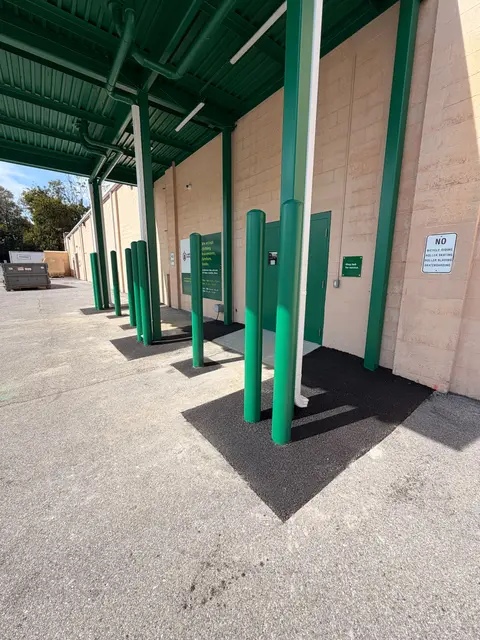
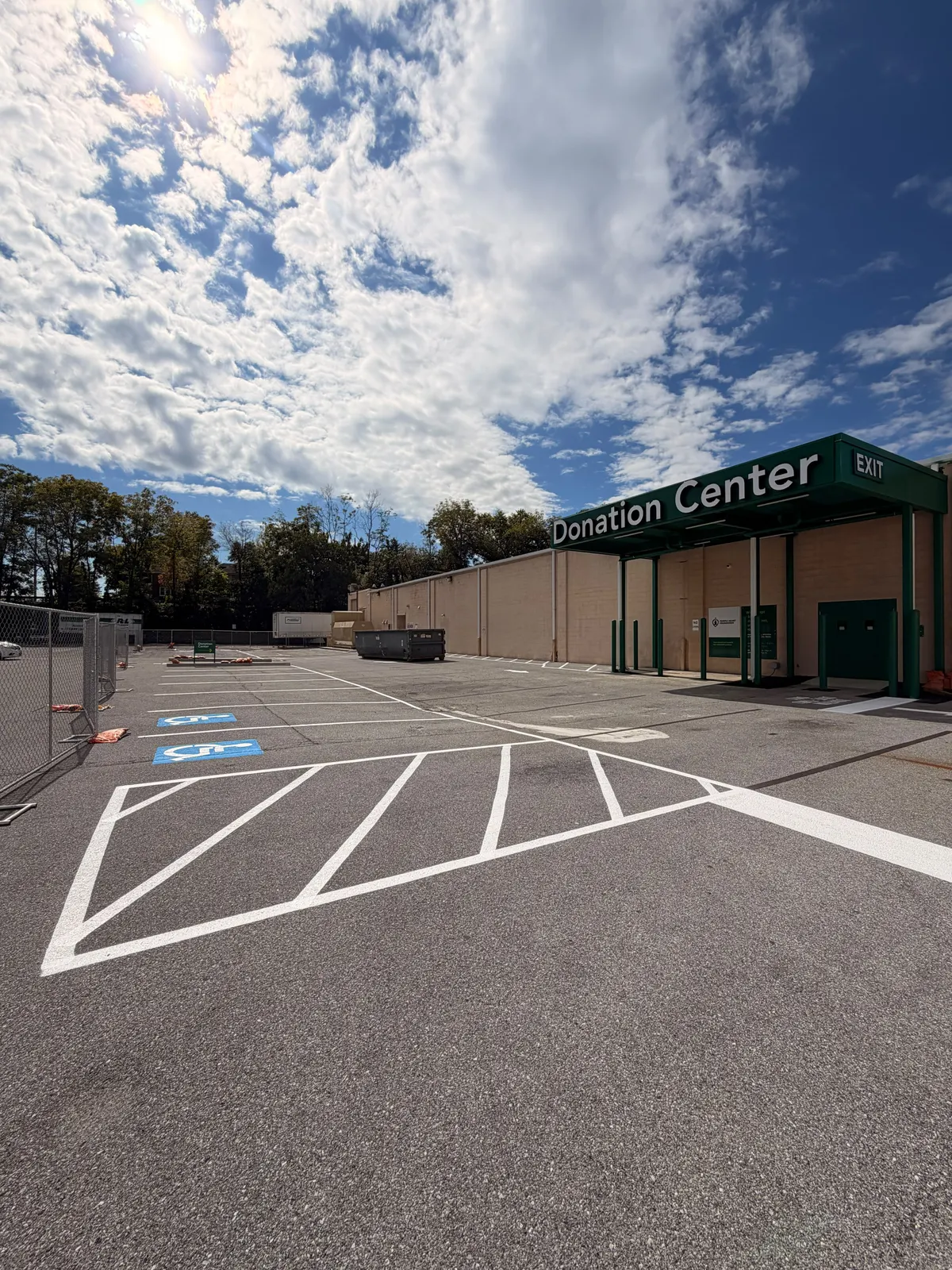
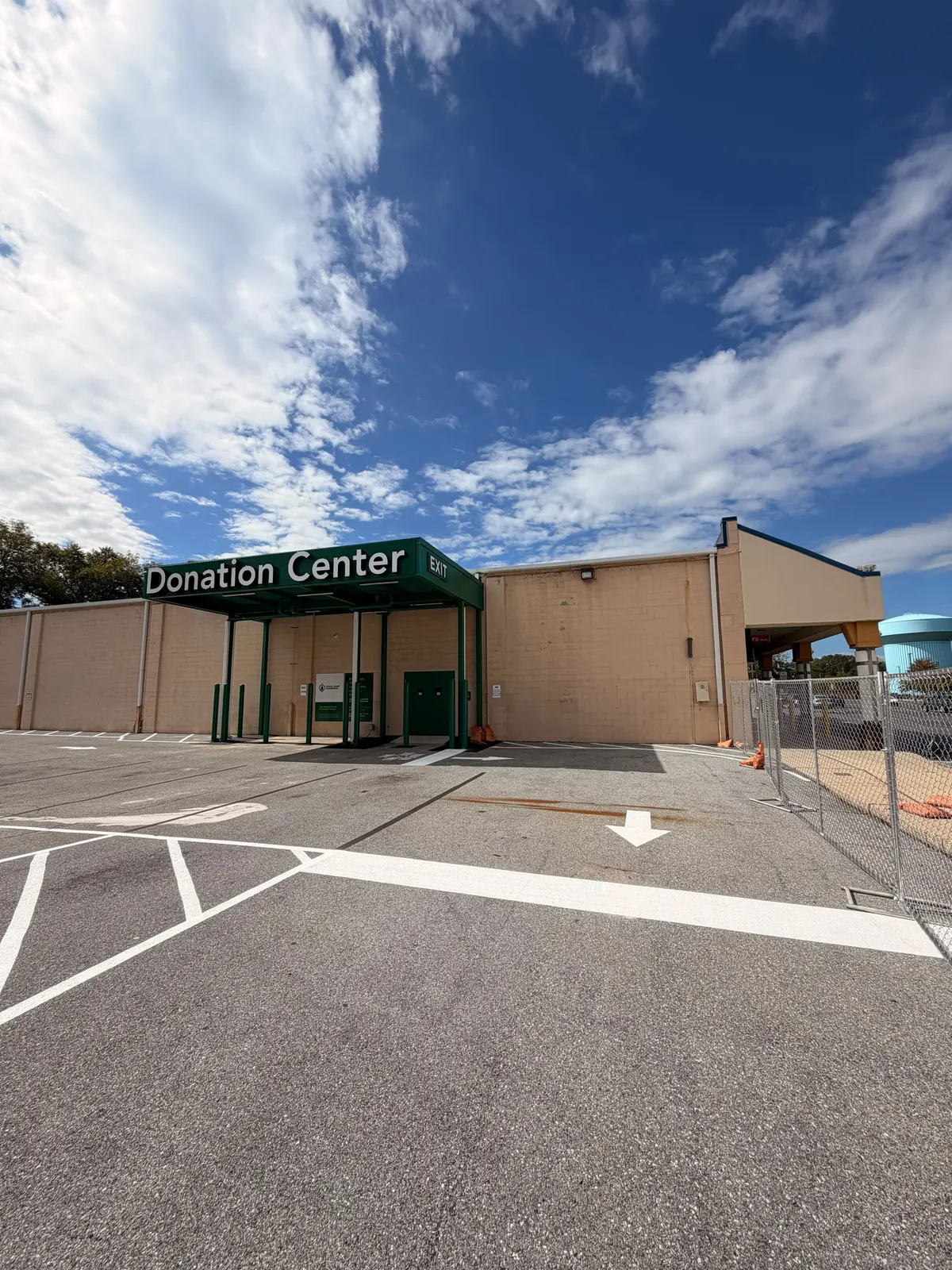
This project was about making that difference obvious from the driver's seat. The photos show the finished result: crisp white stall lines, a large hatched zone that keeps the area in front of the building clear, directional arrows, blue accessible stalls with hatched access aisles, and fresh black asphalt under the green drop-off canopy.
The problem with a drop-off lot
Most parking lots have one job: store cars. A drop-off lot has a flow. Cars come in, pull up to a specific spot, stop for a few minutes, and leave. If the markings do not support that flow, drivers improvise, and improvised parking at a drop-off point causes three predictable problems.
Blocked drop-off lanes. A car parked in front of the canopy means the next donor stops in the drive aisle instead, and the line backs up toward the entrance.
Conflicts with pedestrians. Staff carry bins and carts between the canopy and the building. Cars cutting across that area create risk.
Accessible stalls that are hard to find or hard to use. People with disabilities shop at and donate to these centers. Accessible stalls have to be close to the entrance, correctly sized, and clearly marked.
Good striping solves most of this without a single sign. The paint does the talking.
What was painted
White stall lines
The stalls are painted in white, which gives a clean, high contrast look on the asphalt. Stall lines were laid out to keep consistent widths so the rows look straight and the lot holds the cars it is designed for.
A hatched keep-clear zone
The most striking part of the job is the large area of white diagonal hatching in front of the building. Hatching is the universal signal for "do not park or stop here." It keeps the space in front of the doors and the drop-off area open, so donors can see where to pull up and staff have room to move.
Hatching is also where careless striping shows. Every diagonal has to run at the same angle and the same spacing, and the outline has to be square. When we hatch a zone like this, the outline and the diagonals are laid out with chalk lines first, then painted. On a large hatched area, that preparation is the difference between a zone that looks deliberate and one that looks like someone guessed.
Directional arrows
Arrows show which way to drive. In a drop-off lot, they matter more than usual, because the whole point is to bring cars in one way, past the drop-off point, and out the other way. Arrows are painted by hand with stencils, placed where a driver will see them before the decision point, not after it.
Blue ADA stalls with access aisles
The accessible stalls are painted with a blue background and the white symbol of access, and each has a hatched access aisle beside it. The aisle is the part people forget. It is the space a wheelchair user needs to get out of the car, or a van needs to deploy a lift. The hatching keeps other drivers from parking in it.
When we lay out accessible stalls, we check three things before we paint:
- The count. The number of accessible stalls required depends on the total number of stalls in the lot, under the ADA Standards.
- The size. Stalls and access aisles have minimum widths. At least one in every six accessible stalls has to be van accessible.
- The location. Accessible stalls belong on the shortest accessible route to the entrance.
We explain the rules in plain English in our guide to ADA parking requirements in Pennsylvania.
Sealing under the drop-off canopy
One part of this property gets more wear than anywhere else: the drop-off lane under the canopy. Cars stop there over and over, wheels turn while the cars are standing still, and boxes, carts and bins get dragged across the surface. That area was sealed, and the photos show fresh black asphalt running along the building under the green canopy, between the green bollards.
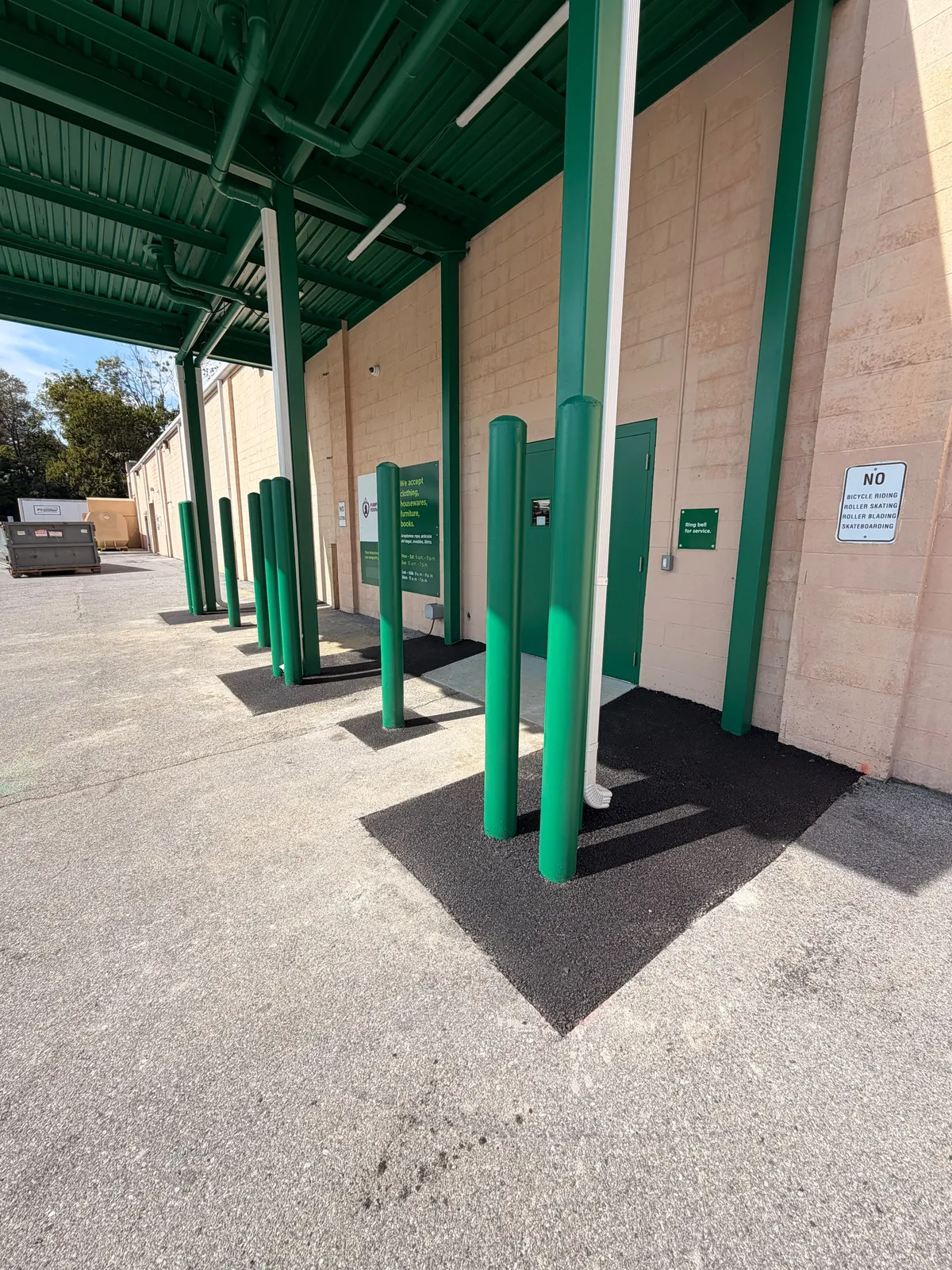
Sealing a high wear area like this protects the asphalt from water, oil and the sun, and it gives the drop-off lane a clean, cared-for look that matches the fresh striping. On a lot that is not ready for a full sealcoat, sealing the heaviest wear areas first is a sensible way to spend the budget where it does the most good.
Order of work
On any lot where both sealing and striping happen, the order matters:
- Clean the surface and fill any cracks that need it.
- Seal and let the sealer cure, usually 24 to 48 hours depending on weather.
- Paint the lines, hatching, arrows and symbols on the cured surface.
Paint applied to uncured sealer can bleed or fail. Paint applied before sealing gets covered and has to be done twice. We plan a job like this so each step happens once.
Keeping a busy lot open
A donation center does not close for a day because the lines are being painted. The usual approach is to work in sections: cone off one part of the lot, paint it, let it dry, open it, and move on. Water based traffic paint dries quickly in warm, dry weather, so sections reopen fast. The drop-off lane can be kept open by painting around it and doing the canopy area when donations are slow, often early in the morning.
For any property with steady traffic, we talk through the schedule before the job, so staff know which parts of the lot will be closed and when. Our checklist for getting a property ready for striping day covers the details.
What a lot like this needs going forward
- Hatched zones and arrows wear first. They sit where cars turn and stop, so they lose paint faster than stall lines. Plan to touch them up more often.
- ADA stalls need to stay legible. A faded symbol or a worn aisle is treated as a missing one. Check them every spring.
- The drop-off lane takes the most abuse. Watch it for cracks and oil spots, and keep it sealed.
- Re-stripe on a schedule. Most busy commercial lots look best with fresh lines every one to two years. Our guide on how often to re-stripe a parking lot has a simple test you can do yourself.
Lessons for other drop-off properties
This kind of lot is not unique to donation centers. Pharmacies with drive-through windows, schools with pickup lanes, restaurants with curbside pickup, churches with drop-off doors and medical offices with patient loading zones all have the same two kinds of traffic. A few principles apply to all of them:
- Mark the place cars should stop, and mark the places they should not. Hatching does the second job better than signs.
- Use arrows to set the flow. One way in, past the drop-off, one way out.
- Put the accessible stalls on the shortest route to the door, and make the aisles impossible to miss.
- Protect the heaviest wear areas first if the budget will not cover a full sealcoat.
- Keep it consistent. One color scheme, one line width, the same stencils throughout the lot.
Questions property managers ask about jobs like this
Can you change our layout while you re-stripe?
Yes. Re-striping is the best time to fix a layout that does not work, for example adding a hatched keep-clear zone or moving accessible stalls closer to the entrance. Old lines that no longer apply are blacked out so drivers do not follow them.
Do you paint the signs?
We paint the pavement markings. Accessible stalls also need posted signs, which are a separate trade. We tell you what each sign needs to say and where it goes.
White or yellow lines?
Either works. White looks crisp on dark asphalt; yellow is common on older lots. The important thing is to use one scheme across the whole lot.
How long will the paint last?
On a busy lot, expect hatching, arrows and the drop-off area to need touch ups sooner than stall lines. Most commercial lots get fresh lines every one to two years.
Can you seal just part of the lot?
Yes. Sealing high wear areas, such as a drop-off lane or a loading area, is a reasonable first step when a full sealcoat is not in the budget.
Details
- Donation center parking lot with a covered drop-off lane.
- White stall lines, a large white hatched keep-clear zone and directional arrows.
- Blue ADA stalls with the symbol of access and hatched access aisles.
- Freshly sealed asphalt along the building under the drop-off canopy.
Lancaster Lines & Asphalt stripes and seals commercial lots across Lancaster County and the surrounding area, including drop-off and pickup lots with tricky traffic flow. See the parking lot striping page and the ADA markings page, or request a free quote.