
Your parking lot is more than just a place to leave cars. It is the very first physical interaction a customer has with your business. Before they shake your hand, taste your food, or buy your products, they judge your competence by the condition of your pavement.
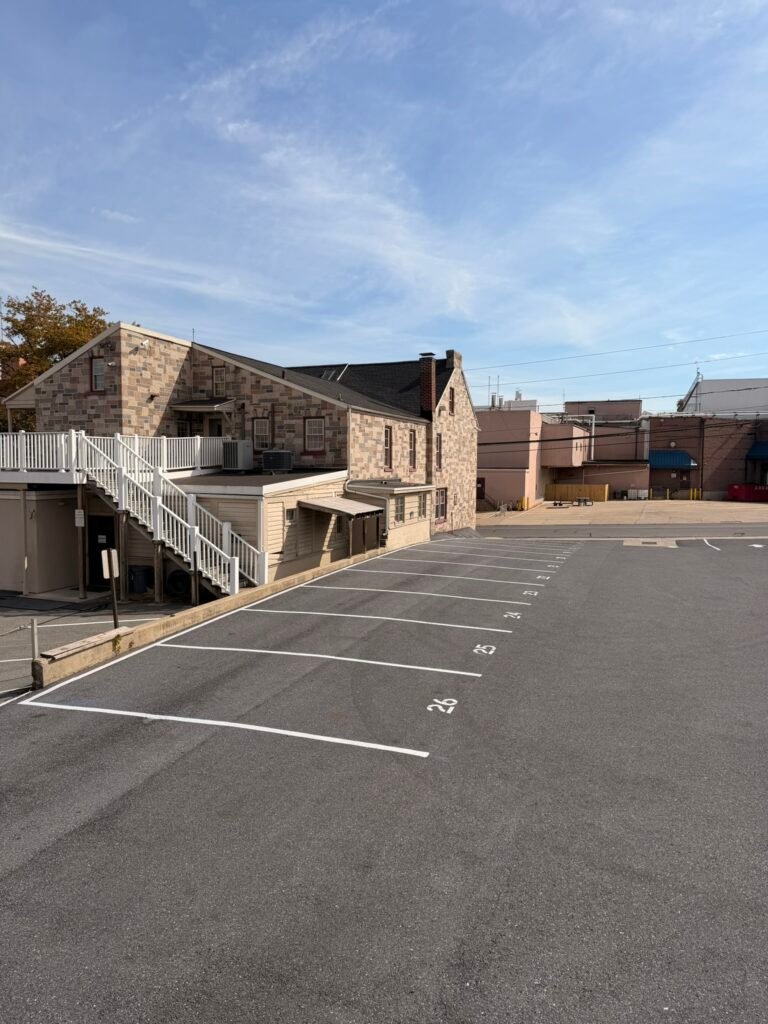
A crisp, freshly striped lot says, “We are professional, organized, and we care about safety.” A faded, chaotic lot says, “We cut corners.”
But beyond aesthetics, there are serious legal and safety implications to faded lines. In the harsh climate of Lancaster, PA—where snow plows, road salts, and freeze-thaw cycles wreak havoc—maintenance schedules are different than in Florida or Arizona.
So, how often should you really be restriping? As the leading asphalt experts in Lancaster County, we are pulling back the curtain on industry standards, legal requirements, and the “hidden” signs that it’s time to call the pros.
The Golden Rule: Every 18 to 24 Months
For most businesses in Pennsylvania, the industry standard for re-striping is every 18 to 24 months.
However, “average” doesn’t apply to everyone. A busy Wawa or Sheetz gas station has very different needs than a quiet church parking lot. The lifespan of your line striping depends on a formula we call the “Traffic-Weather Matrix.”
1. High-Traffic Zones (Re-Stripe Annually)
If your lot sees over 500 cars a day (grocery stores, fast food chains, busy shopping centers), your lines will degrade much faster.
- The Cause: Tire friction. Every time a car turns its wheels while stopped, it grinds the paint like sandpaper.
- The Risk: In high-traffic zones, faded lines lead to “space drift”—people taking up two spots—which can reduce your parking capacity by 20%.
2. Moderate Traffic (Re-Stripe Every 18-24 Months)
Office buildings, apartment complexes, and standard retail stores usually fall into this category.
- The Strategy: Bi-annual re-striping keeps the lot looking fresh without overspending. This is often done in conjunction with routine maintenance checks.
3. Low Traffic (Re-Stripe Every 24-36 Months)
Warehouses, churches, or employee-only lots.
- The Warning: Even if traffic is low, weather still fades the paint. UV rays from the sun bleach the pigments, turning bright yellow into a pale, chalky cream color.
The “Silent Destroyers” of Parking Lot Paint
Why does paint fail? Understanding this helps you save money.
1. The Pennsylvania Winter Factor
In Lancaster, Lititz, and Ephrata, winter is the enemy of traffic paint.
- Snow Plows: A steel plow blade scraping across asphalt is brutal. It can shear the top layer of glass beads (which make the paint reflective) right off the surface.
- Rock Salt & Calcium Chloride: De-icing chemicals are corrosive. They break down the binders in the paint, causing it to flake and lift.
2. Water and Oxidation
As asphalt ages, it turns from black to gray (oxidation). As the surface becomes rougher, the paint has a harder time holding on.Expert Tip: This is why we always recommend [INTERNAL LINK: Sealcoating your lot] before striping. Fresh sealcoat provides a smooth, jet-black canvas that makes the white lines “pop” and improves adhesion by up to 50%.
3. Oil and Gas Drips
Petroleum eats petroleum. Since asphalt and traffic paint are both chemical-based, oil drips from cars will dissolve the paint lines, leaving brown, mushy spots.
5 Signs You Need to Re-Stripe Immediately
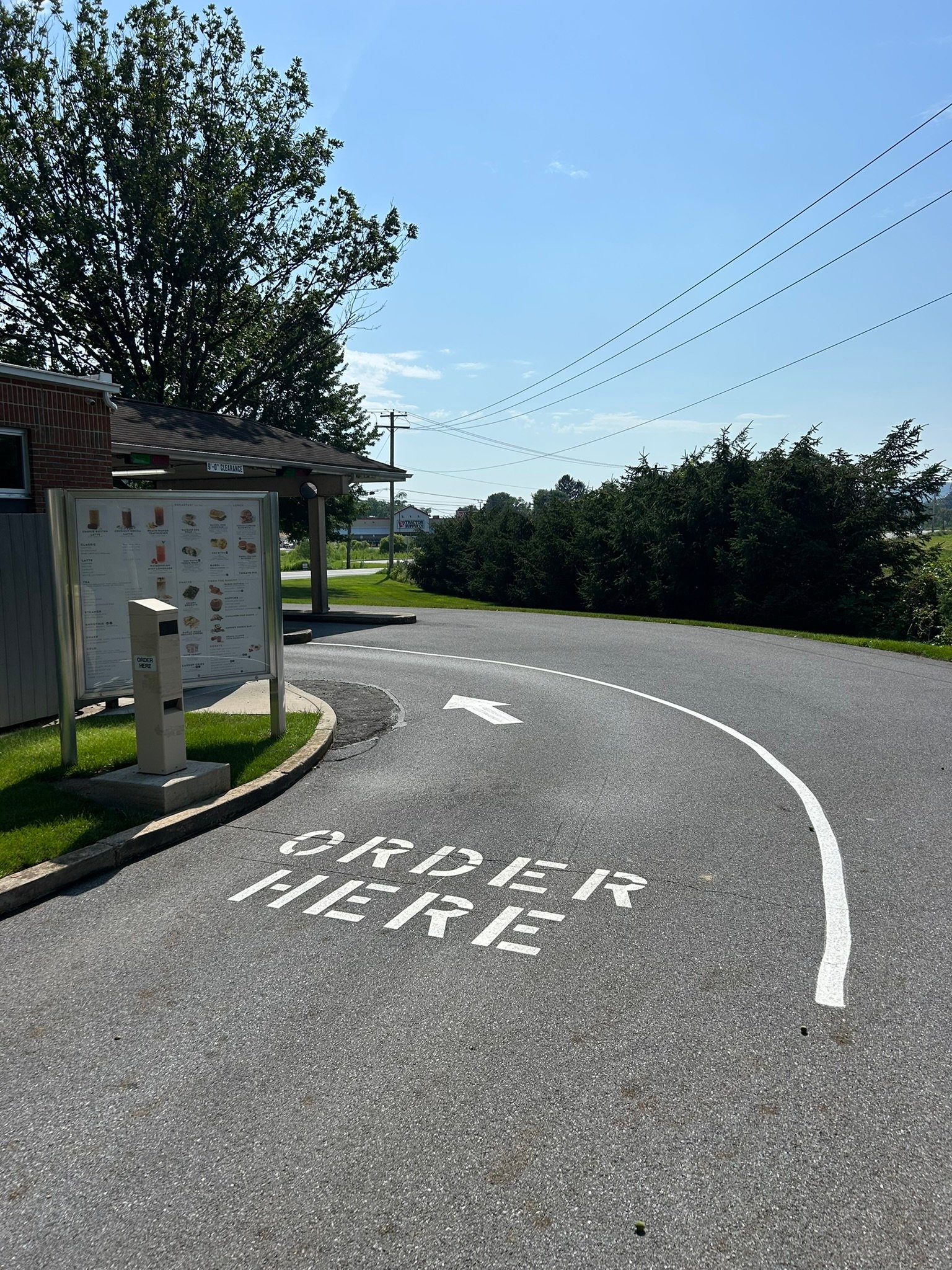
Do not wait for a calendar reminder. If you see these signs, you are already overdue.
1. The “Ghost Line” Effect
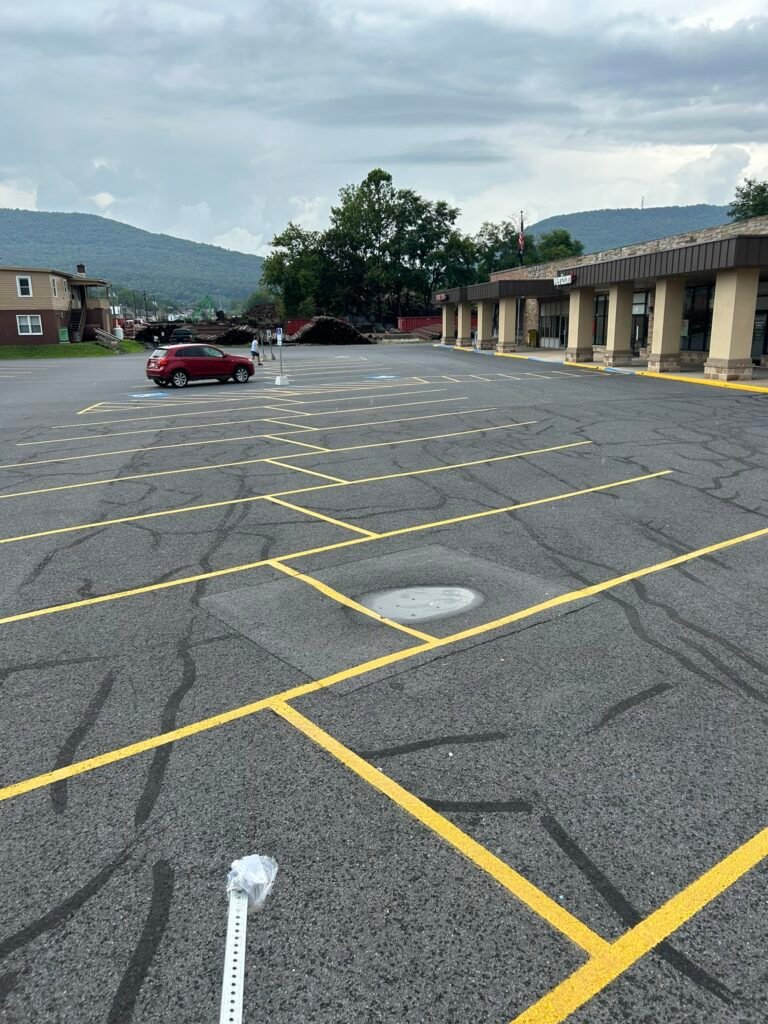
Can you see where the old lines used to be, but they are just faint gray shadows? This is dangerous, especially at night or in the rain. When lines are wet, they lose visibility. If your lines are less than 50% visible, you are liable if an accident occurs.
2. Faded Fire Lanes
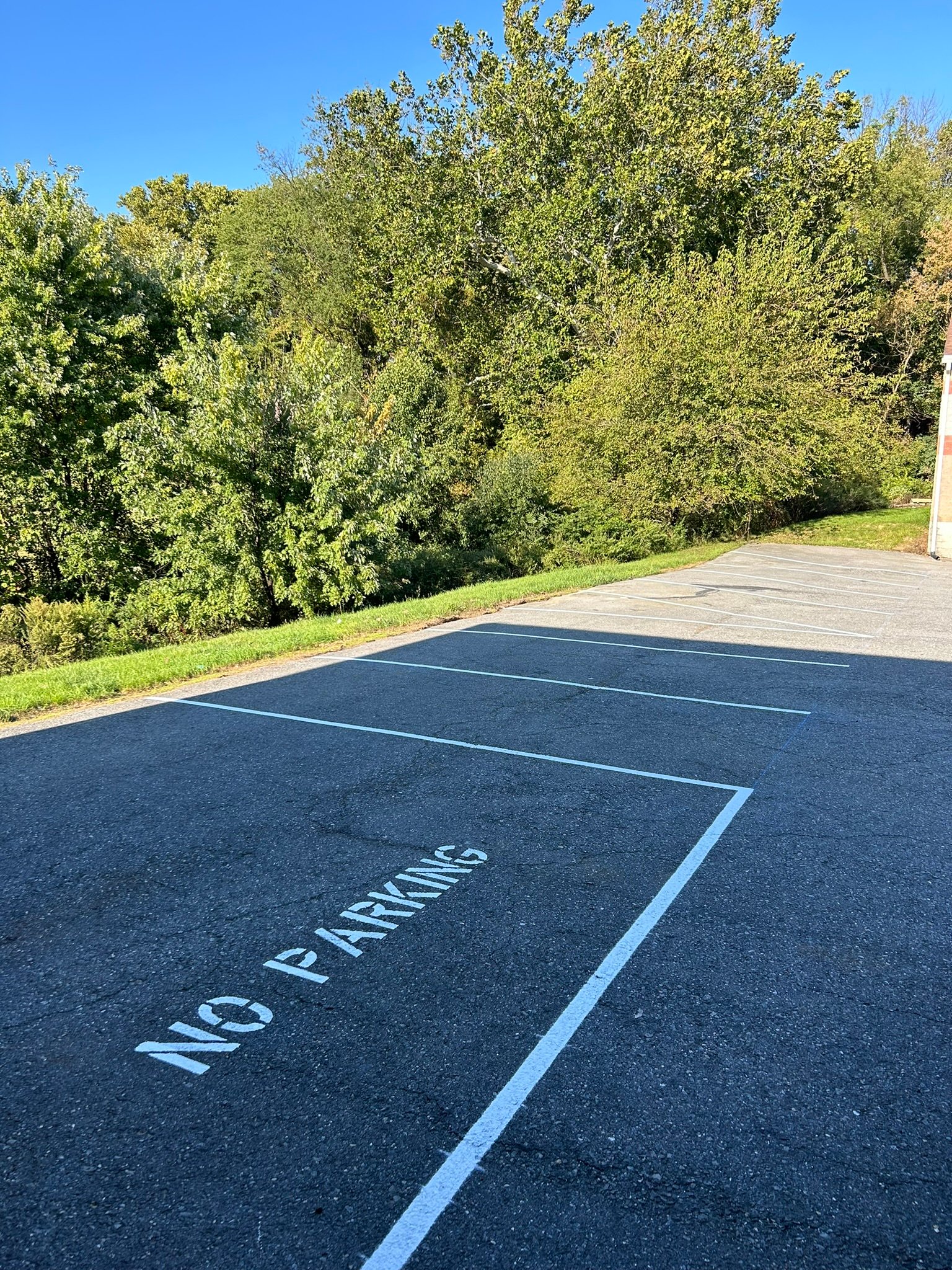
Fire Marshals do not joke around. Red fire curbs must be bright and legible. If a fire truck cannot immediately identify the “No Parking” zone during an emergency because your paint was faded, you could face massive fines and negligence lawsuits.
3. ADA Compliance Failures
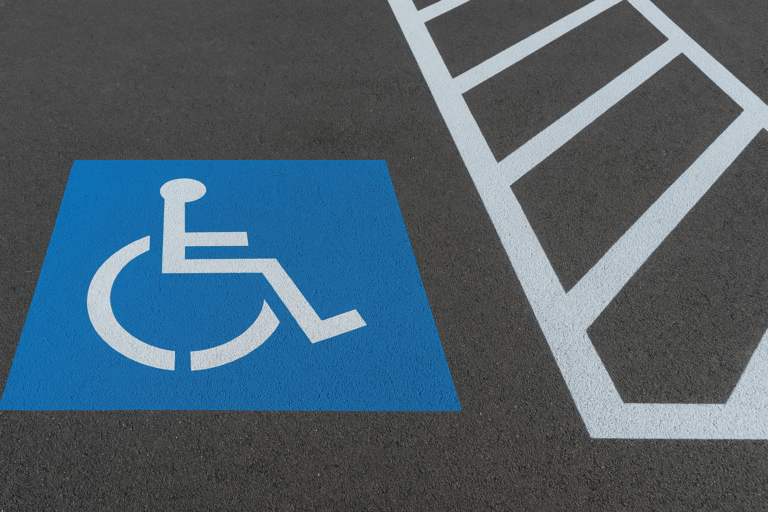
The Americans with Disabilities Act (ADA) requires that handicap spots be clearly marked.
- Is the blue paint faded?
- Are the diagonal cross-hatch lines visible? If a disabled customer cannot safely identify the access aisle, you are open to a lawsuit.
4. Poor Parking Discipline
Are customers parking crooked? Are they taking up two spots? This isn’t just bad driving; it’s a symptom of poor striping. When drivers can’t see the boundaries, they guess. This leads to door dings and reduced capacity.
5. Post-Winter Damage
Inspect your lot every April. Did the plow scrape off the “Stop” bar at the exit? Is the pedestrian crosswalk missing? Spring is the critical time to repair winter damage.
Don’t forget to check for cracks! Learn about our Hot Rubber Crack Filling services.]
The Business Case: Why Striping is High-ROI
Property managers often ask, “Can we skip it this year?” We advise against it. Here is why re-striping is an investment, not a cost.
1. Liability Reduction
Slip-and-fall lawsuits are common. If a pedestrian trips on a speed bump that wasn’t painted yellow, or gets hit by a car in a faded crosswalk, the first thing their lawyer will photograph is the condition of your pavement markings. Fresh paint is your best legal defense.
2. Maximizing Revenue
A confusing lot holds fewer cars. By re-striping, we can often [INTERNAL LINK: optimize your Parking Lot Layout] to add more spaces.
- Scenario: A restaurant with a poorly marked lot might lose 5 parking spots to bad parking. That’s 5 tables of customers walking away on a Friday night.
3. Curb Appeal = Trust
According to the Asphalt Pavement Alliance, the appearance of a facility’s exterior is the number one factor in a consumer’s decision to enter a store. A fresh black-and-white lot looks brand new, even if the pavement is 10 years old.
The Process: How We Stripe at Lancaster Lines & Asphalt
We don’t just spray and pray. We follow a strict protocol to ensure longevity.
- Surface Prep: We blow off all dirt, debris, and loose gravel. You cannot paint over dirt—it will peel in a week.
- Layout & Chalking: We measure twice. We snap chalk lines to ensure straight, crisp edges.
- The Paint: We use DOT-approved Traffic Paint (SetFast or similar high-solids paints). These are formulated to withstand traffic wear and UV fading.
- Glass Beads (Optional): For highways or high-safety zones, we sprinkle retro-reflective glass beads into the wet paint for night visibility.
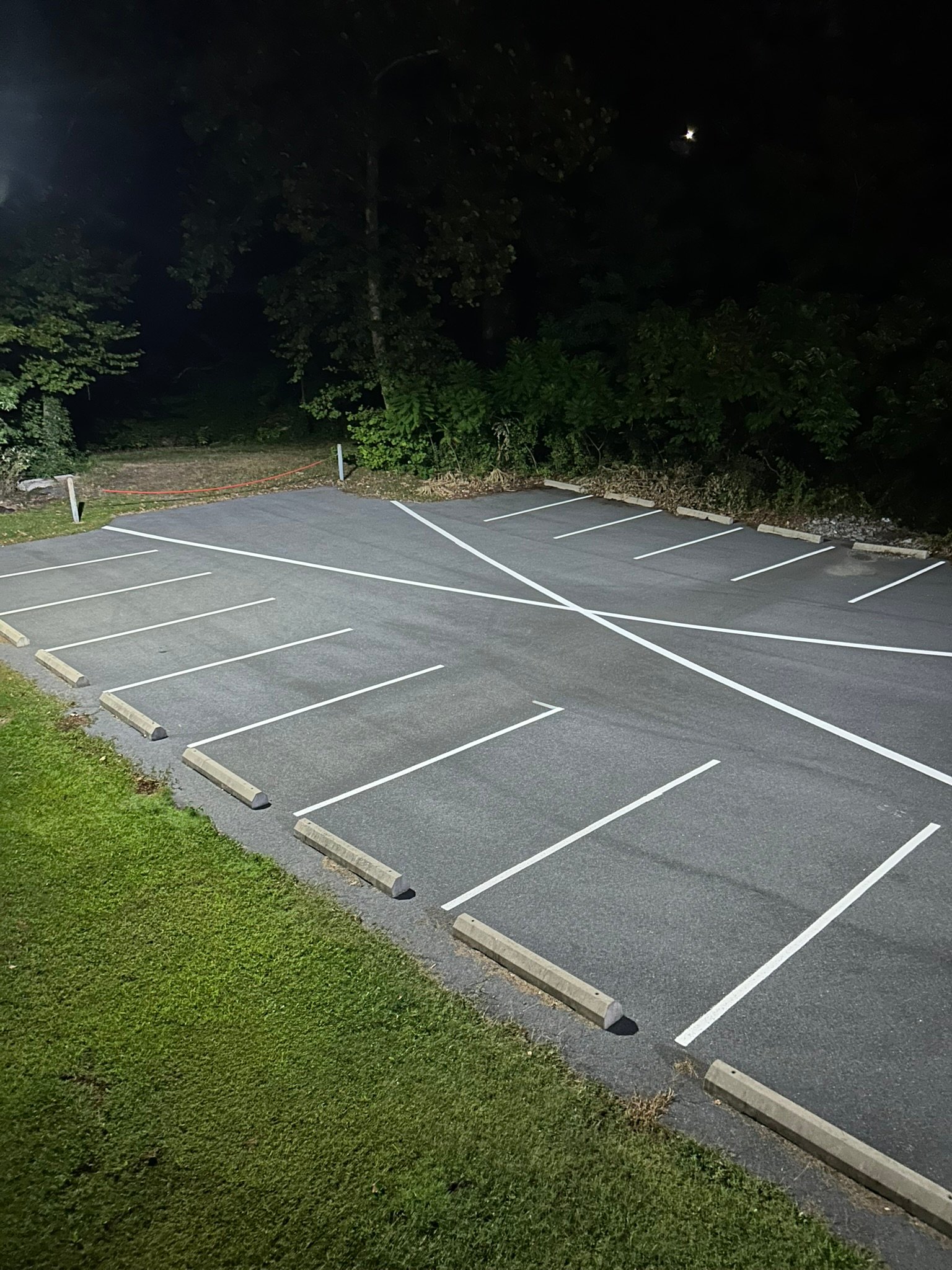
- Drying Time: Our high-tech paints dry to the touch in 15-30 minutes, meaning we can stripe your lot at night, and it’s ready for business by morning.
FAQ: Your Re-Striping Questions Answered
Q: Can you stripe over old lines? A: Yes, this is called “over-striping.” It is the most common and affordable service. However, if the old lines are peeling heavily, we may need to scrape them first.
Q: What if I want to change the layout? A: We can “black out” the old lines using a special black traffic paint or asphalt slurry, and then stripe the new layout over the top.
Q: Can you work at night so my business doesn’t close? A: Absolutely. At Lancaster Lines & Asphalt, we specialize in off-hour work to ensure zero disruption to your customers.
Conclusion: Don’t Let Your Lot Fade Away
Your parking lot is a significant asset. Don’t let a few hundred dollars of paint stand between you and a safe, professional, legally compliant business.
If your lines are gray, your handicap spots are invisible, or your fire lanes are dull—it’s time to act.
Ready to brighten up your business? Contact Lancaster Lines & Asphalt today for a free evaluation. We serve Lancaster, Lititz, Ephrata, and the surrounding areas.