Call us: (717) 454-9931

As the snow melts across Lancaster County and the temperatures finally begin to stabilize above freezing, property managers and homeowners often heave a sigh of relief. Winter is over. But for your pavement, the battle has just ended, and the scars are likely visible.
In Pennsylvania, the transition from winter to spring is the single most critical period for asphalt maintenance. The freeze-thaw cycles we experienced this year—where water penetrates the surface, freezes, expands by 9%, and fractures the binder—have likely compromised the structural integrity of your parking lot or driveway.
This isn’t just aesthetic. As Dr. David Timm, a noted researcher at the National Center for Asphalt Technology (NCAT), frequently emphasizes in his studies on pavement lifecycle, proactive maintenance is not merely a cost—it is an asset preservation strategy. Every dollar spent on preventative maintenance (like crack sealing) saves approximately $6 to $10 in reactive rehabilitation (like repaving) down the road.
This guide is not a generic “clean your driveway” list. It is a comprehensive, expert-level diagnostic checklist designed for property owners who understand that asphalt is a significant financial asset. Here is exactly what you need to look for, the science behind the damage, and how to fix it before summer heat sets in.

1. The Science of “Winter Kill”: Why Your Pavement Looks Worse Now
Before we inspect, you must understand the enemy. Why does March reveal so much damage?
Asphalt is porous by nature. Over time, as the bitumen (the black glue holding the rocks together) oxidizes from UV rays, it becomes brittle.
- Infiltration: Rain and snowmelt seep into these micro-pores.
- Expansion: When the temperature drops below 32°F (common in Lancaster nights), that trapped water freezes. Ice occupies 9% more volume than liquid water. This hydraulic pressure pushes the aggregate apart.
- The Thaw: When it melts, it leaves a void. Traffic drives over this void, crushing the unsupported asphalt.
- The Result: Potholes and alligator cracking.
If you ignore this in April, the spring rains will wash away the sub-base, turning a $500 repair into a $15,000 resurfacing job.
2. The 7-Point Spring Inspection Checklist
Walk your property today with this checklist in hand. If you spot these signs, immediate action is required.
A. Inspection of Linear Cracking (Transverse & Longitudinal)
Look for long, straight cracks.
- Transverse cracks run perpendicular to the traffic flow (across the road). These are usually caused by thermal shrinkage—the asphalt getting cold and snapping.
- Longitudinal cracks run parallel to the centerline (along the road). These often indicate poor joint construction or fatigue.
The Expert Fix: Do not use hardware store “cold patch” for these. It is a temporary band-aid. These cracks require professional Hot Rubberized Crack Filling. We use a hot-applied polymer-modified sealant heated to 375°F. This material doesn’t just fill the crack; it bonds to the walls and remains flexible. When the pavement expands in summer heat, the rubber moves with it. If you leave these open, water will reach the sub-base during April showers.
B. Identifying “Alligator” Cracking (Fatigue Failure)
Look for areas that resemble the skin of an alligator—interconnected cracks forming small polygons. The Diagnosis: This is critical. Alligator cracking is not a surface issue; it is a symptom of structural failure. The sub-base under the asphalt is wet and moving. The Fix: You cannot sealcoat over alligator cracking. It requires “cut and patch” removal. We must saw-cut the damaged square, remove the asphalt, re-compact the stone base, and install hot-mix asphalt. Catching this early keeps the patch small.
C. Drainage and Standing Water Check
After a rainstorm, check your lot. Are there puddles (“birdbaths”) that remain for more than 24 hours? Standing water acts as a magnifying glass for the sun, accelerating oxidation, and works like a solvent to break down the oil in the asphalt. The Fix: If the depression is slight, an infrared patch or surface patch might level it. If it’s severe, catch basins may need adjustment.
D. The Pothole Progression
A pothole is the final stage of neglect. It means the asphalt has collapsed into a void. Liability Alert: In Pennsylvania, property owners can be held liable for trip-and-fall accidents caused by potholes or uneven surfaces. A single lawsuit costs significantly more than a patch. The Fix: Clean, tack, fill, and compact. We use professional-grade compactors to ensure the new patch matches the density of the surrounding pavement.
E. Faded Line Striping and ADA Compliance
Winter snowplows are brutal on parking lot paint. They scrape off the glass beads and pigment, leaving lines dull or invisible. Why it matters:
- Safety: Faded fire lanes or stop bars create traffic chaos.
- Legal Compliance: The Americans with Disabilities Act (ADA) has strict requirements for handicap accessibility. If your blue handicap stalls are faded or lack the proper “van accessible” hatching, you are non-compliant.
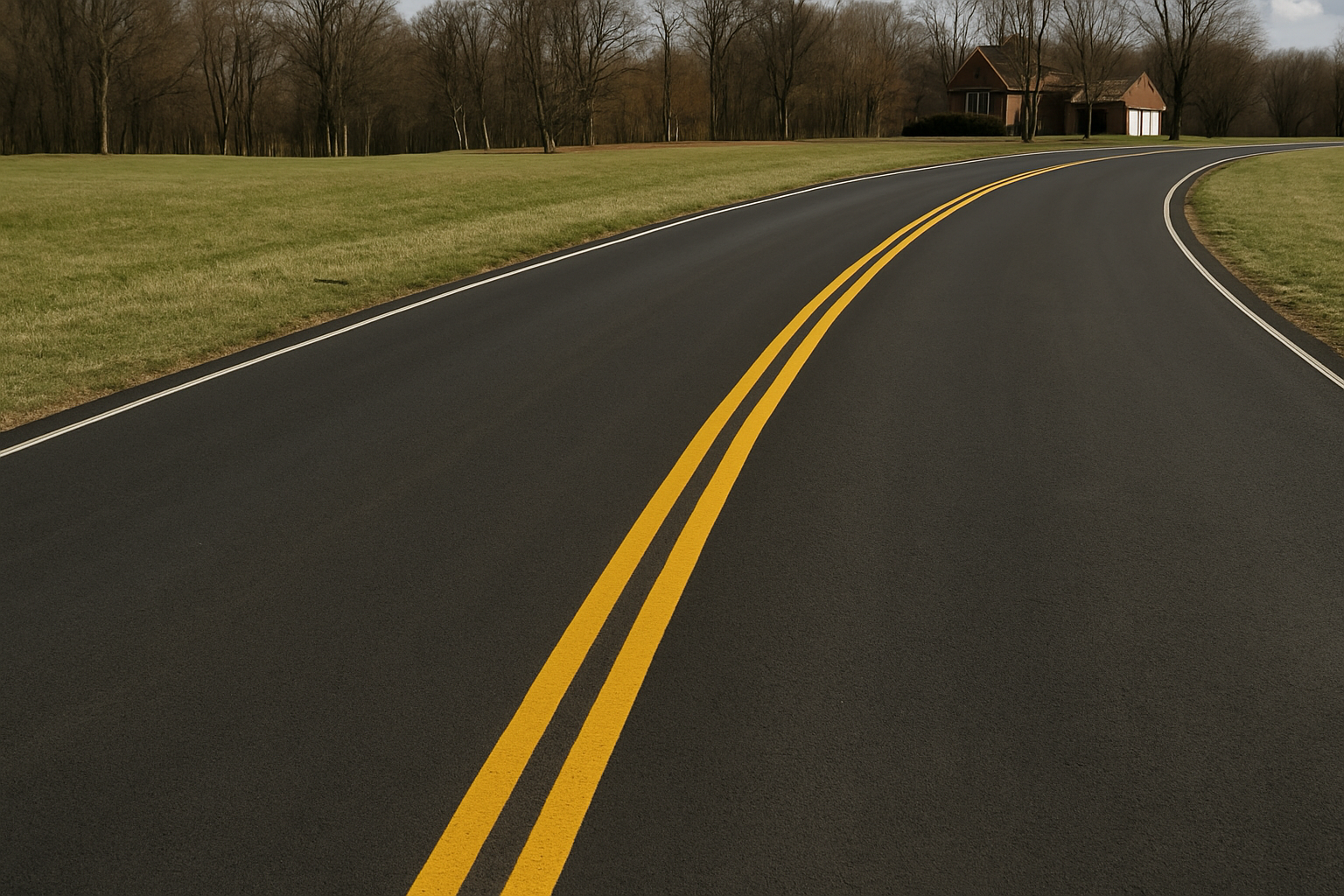
- Curb Appeal: Nothing says “neglected business” like faded lines. Fresh, crisp white and yellow lines are the highest ROI cosmetic upgrade you can make.
F. Oil and Gas Stains
Look at the parking spots. Are there black, soft blotches? Motor oil and gasoline are solvents. They chemically dissolve the asphalt binder (which is a petroleum product). If you poke an oil spot with a screwdriver, it will likely be soft and mushy. The Fix: These spots must be treated with a primer or cut out before sealcoating, or the oil will bleed right through the new sealer.
G. Graying and Oxidation (Raveling)
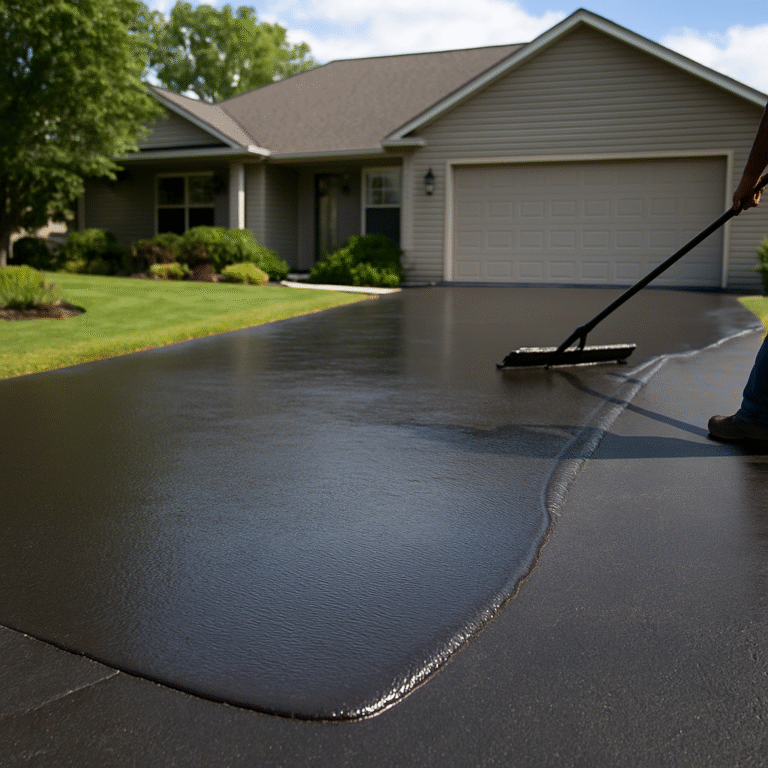
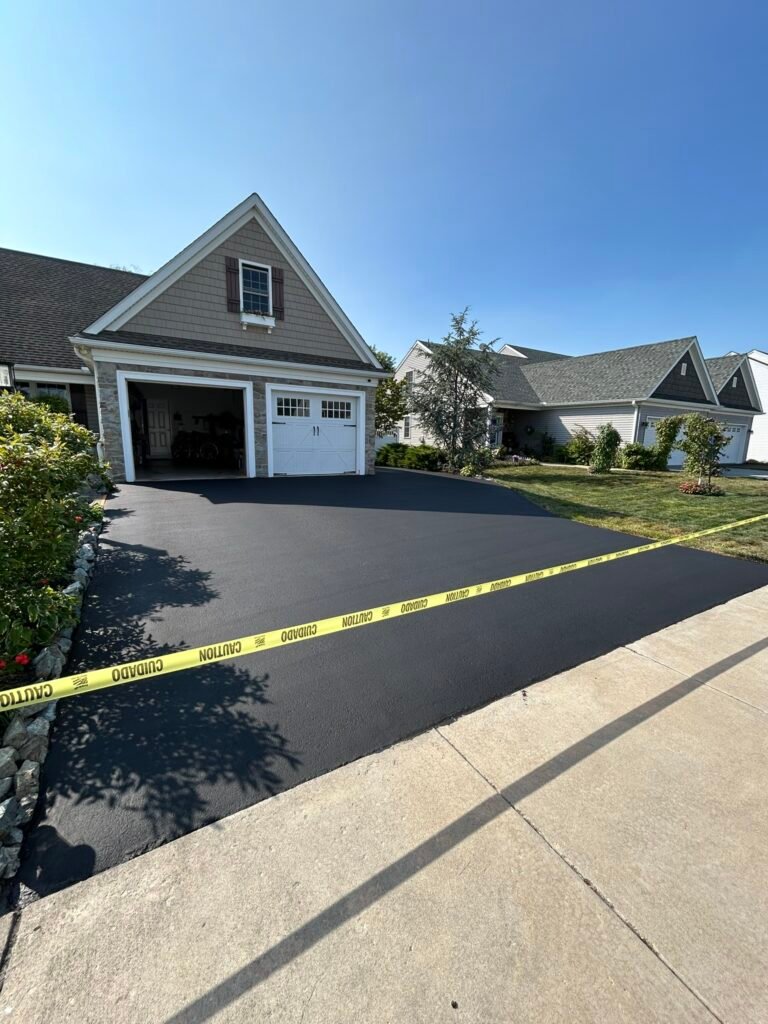
Fresh asphalt is jet black. Old asphalt is gray. This color change is oxidation. As the binder dries out, the surface stones (aggregate) begin to loosen and pop out. This is called “raveling.” The Fix: This is where Sealcoating comes in. Sealcoating acts as a barrier against UV rays, water, and oil. It restores the flexibility to the surface and locks the aggregate in place.
3. The Economics of Preservation: Why Wait?
According to data from the Asphalt Pavement Alliance, a well-maintained pavement can last 25 years or more. A neglected one might fail in 12 years.
Let’s break down the math for a typical commercial lot in Lancaster:
- Scenario A (Reactive): You ignore the cracks. Water undermines the base. In 5 years, you need a full resurface (overlay). Cost: Approx $2.50 – $4.00 per sq. ft.
- Scenario B (Proactive): You spend pennies per foot on crack sealing and sealcoating every 3 years. You extend the life by 10-15 years. Cost: Approx $0.25 – $0.40 per sq. ft.
The ROI is over 500%. There is no other building maintenance task that offers this level of return.
4. Strategic Planning: The “Triage” Method
We understand that budgets aren’t infinite. If you cannot fix everything this spring, we recommend this triage order:
- Priority 1: Safety Liabilities. Deep potholes and trip hazards (heaved cracks > 1/4 inch). Fix these immediately to avoid lawsuits.
- Priority 2: Water Protection. Crack filling. This stops the damage from spreading. It is the most important structural repair.
- Priority 3: Preservation. Sealcoating. This protects the general surface area.
- Priority 4: Aesthetics/Flow. Line striping (though often done with sealcoating).
5. When Should You Schedule?
This is the most common question we get at Lancaster Lines & Asphalt.
- Crack Filling & Patching: Can be done as soon as the ground is dry and temperatures are above 40°F. We are booking these jobs now.
- Sealcoating: Requires consistent temperatures of 50°F and rising (overnight lows above 40°F are ideal). Usually, this season opens fully in late April or May in PA.
- Line Striping: Can be done anytime the surface is dry and warm (45°F+).
Pro Tip: Do not wait until May to call. The best contractors in Lancaster are booked weeks in advance by then. Calling in March ensures you get on the schedule before the summer rush.
Conclusion: Take Control of Your Pavement
Your parking lot is the first thing customers see and the last thing they experience. A pothole-riddled, faded lot sends a message of neglect. A crisp, black, well-marked lot signals professionalism and safety.
Don’t let the damage from this past winter compound into next year.
Ready for a professional assessment? Lancaster Lines & Asphalt offers comprehensive site evaluations. We don’t just give you a price; we give you a plan.
Call us today at (717) 454-9931